Showing posts with label croatia. Show all posts

Thursday, 24 March 2016

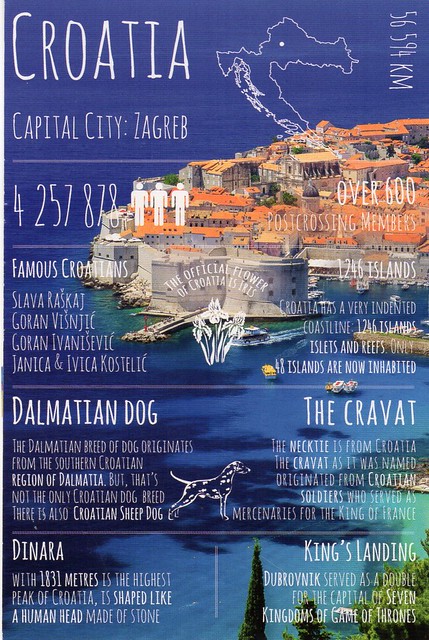
Greetings from Croatia

Today's 'Greetings from' card comes from Croatia. I really like this one, the shades of blue are gorgeous, and I love the colour contrasts here. Also, is that Dubrovnik in the picture?! I only just realised I haven't written about Dubrovnik in this blog before... How did that happen?! I have plenty of postcards from there so will have to fix that.


Dubrovnik is a Croatian city on the Adriatic Sea, in the region of Dalmatia. It is one of the most prominent tourist destinations in the Mediterranean Sea, a seaport and the centre of Dubrovnik-Neretva County. Its total population is 42,615 (census 2011). In 1979, the city of Dubrovnik joined the UNESCO list of World Heritage Sites.

The prosperity of the city was historically based on maritime trade; as the capital of the maritime Republic of Ragusa, it achieved a high level of development, particularly during the 15th and 16th centuries, as it became notable for its wealth and skilled diplomacy.

 The beginning of modern tourism is associated with the construction of the Hotel Imperial in Dubrovnik in 1897. According to CNNGo, Dubrovnik is among the 10 best preserved medieval walled cities in the world. Although it was demilitarised in the 1970s to protect it from war, in 1991, after the breakup of Yugoslavia, it was besieged by the Serb and Montenegrin soldiers gathered in the Yugoslav People's Army (JNA) for seven months and suffered significant damage from shelling.

Tuesday, 31 March 2015

Plitvice Lakes National Park, Croatia

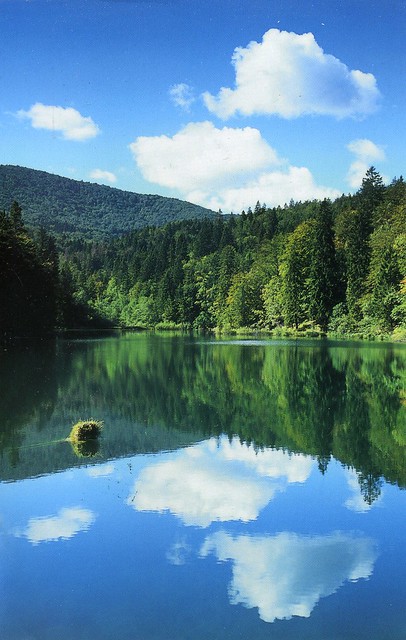
A lovely Unesco card from Agi, received a couple of years ago. Isn't this a stunning view?!


Plitvice Lakes National Park is the oldest national park in Southeast Europe and the largest national park in Croatia.

The national park was founded in 1949 and is situated in the mountainous karst area of central Croatia, at the border to Bosnia and Herzegovina. The important north-south road connection, which passes through the national park area, connects the Croatian inland with the Adriatic coastal region.

The protected area extends over 296.85 square kilometres. About 90% of this area is part of Lika-Senj County, while the remaining 10% is part of Karlovac County.

In 1979, Plitvice Lakes National Park was added to the UNESCO World Heritage register among the first natural sites worldwide. Each year, more than 1,200,000 visitors are recorded.

Sunday, 15 February 2015

Zagreb, Croatia

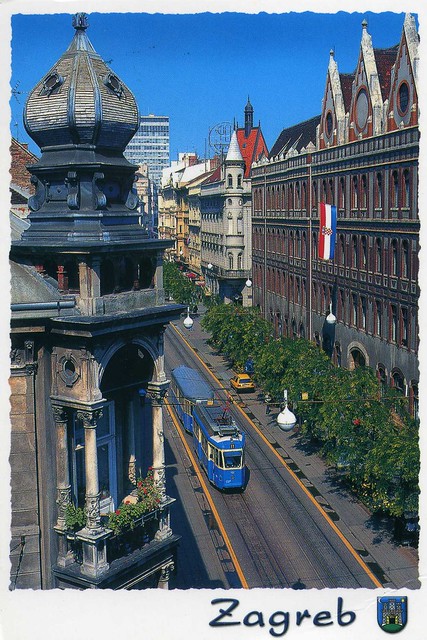
A lovely view of Zagreb I received from dear Nives a few years ago.


This is one of my favourite received views of Zagreb. The blue tram might have something to do with that... :) The building on the right is the central postal building in Zagreb.

By the way, if you want to see more nice views of Zagreb (and other places in Croatia), check out Nives's instagram. If only photos like that were turned into postcards, too....!

Saturday, 20 October 2012

Mailbox, Guernsey

You know those 'Touchnote' cards that were really popular this summer thanks to the promotion? I received some of them, too, but only sent a couple as I realised too late that you didn't need to have a Samsung phone to be able to send these cards, grrr. :( I really like the idea, although I wouldn't want "normal" postcards to be replaced with these as there's no personal handwriting or real stamps.

Anyway.. one of these cards I received was a surprise from dear Agi in Croatia. Thank you so much!! :)


I particularly like this one as it's mail related, and Agi was clever to choose a picture of a Victorian wall post box in Guernsey - seeing as these cards are being sent from Guernsey. I hadn't realised post boxes in Guernsey are blue, I wonder if they are all like that over there? ..hhhmmmm...

Sunday, 16 September 2012

Istra, Croatia

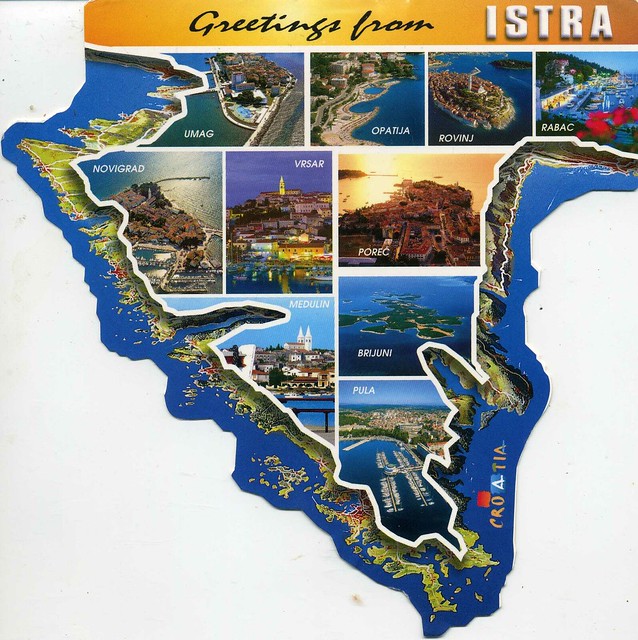
I'm trying to catch up with this blog a little so it's time for another update. This lovely map card is from a swap with Adi in Croatia earlier this year. I love the shape! :D


Istra is the largest peninsula in the Adriatic Sea. The peninsula is located at the head of the Adriatic between the Gulf of Trieste and the Bay of Kvarner. It is shared by three countries: Croatia, Slovenia, and Italy.

Wednesday, 4 July 2012

Blitvenica, Croatia

This lovely lighthouse postcard is from an ongoing swap with dear Agi. I just love this card, the gorgeously blue sea and the matching stamp on the card :)


I couldn't find any info about the place, Blitvenica, except that it's an uninhabited island on the Dalmatian coast. This lighthouse seems pretty isolated...


Agi used a lighthouse stamp on the card! :)

Saturday, 26 May 2012

Goli otok, Croatia

More seaside views... This time from Croatia, sent my the lovely Nives last year. Yeah, I'm really behind with this blog - I have TONS of postcards I want to post about here!


Goli otok is an island off the northern Adriatic coast, located between Rab's northeastern shore and the mainland, in what is today Croatia's Primorje-Gorski Kotar county. The island is barren and uninhabited. Its northern shore is almost completely bare, while the southern one has small amounts of vegetation as well as a number of coves.

Despite having long been an occasional grazing ground for local shepherds' flocks, the barren island was apparently never permanently settled other than during the 20th century. Throughout World War I, Austria-Hungary sent Russian prisoners of war from Eastern Front to Goli otok.

In 1949, the entire island was officially made into a high-security, top secret prison and labor camp run by the authorities of FPR Yugoslavia, together with the nearby Sveti Grgur island, which held a similar camp for female prisoners. Until 1956, throughout the Informbiro period, it was used to incarcerate political prisoners. These included known and alleged Stalinists, but also other Communist Party members or even nonparty citizens accused of exhibiting sympathy or leanings towards the Soviet Union. Many anticommunist (Serbian, Croatian, Macedonian, Albanian and other nationalists etc.) were also incarcerated on Goli Otok. Non-political prisoners were also sent to the island to serve out simple criminal sentences and some of them were sentenced to death. Numbers of total prisoners and massacred victims are unknown but Vladimir Dedijer estimates 32,000 male prisoners in Goli otok only; other historians estimates 4,000 killed.

Wednesday, 9 May 2012

Betina, Croatia

Another seaside view, this time from Croatia. Thank you so much Agi for this treat! :) I'd love to spend a holiday in a place like this, mmmm...!


Betina is a village located on the Croatian island of Murter, seven km from Tisno, where a drawbridge connects the island and the mainland. The largest of the Šibenik archipelago islands, and the closest to the mainland, it has been populated since the time of the Illyrians (tribe of Liburns). Remains of the Roman settlement of Colentum as well as many ruins of Roman villas, murals, and mosaic testify to its occupation during the period of the Roman Empire.

Sunday, 11 March 2012

Dalmatia, Croatia

Just a wee update for today as I've got some time before going out for a meal with a friend. ...and I have tons of postcards that I want to blog about, I'm starting to doubt whether I'll ever get through it!

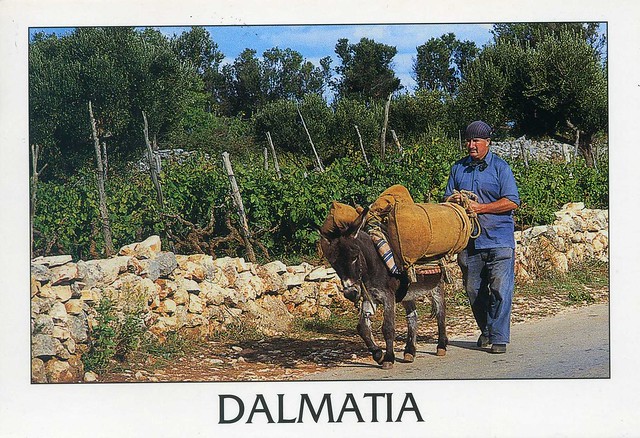
Anyway. This is one of the Year of the Dragon stamp swap cards, this time from Croatia. Thank you so much, Agi!


I really like this card, it seems like it would've been a warm, sunny day and I want to imagine the guy had no hurry going anywhere. Mmmmmm, I'd like that too!

Dalmatia is a historical region on the eastern coast of the Adriatic Sea. It stretches from the island of Rab in the northwest to the Bay of Kotor in the southeast. The hinterland, the Dalmatian Zagora, ranges from fifty kilometers in width in the north to just a few kilometers in the south. The Dalmatian dog received its name from Dalmatia, as does the dalmatic, a Roman Catholic liturgical vestment worn by deacons and bishops.

Saturday, 22 October 2011

Plešivica, Croatia

Another beautiful postcard from a dear friend, this time from Nives. I actually received this card a few months ago, but I'm really, really behind with this blog.. :/


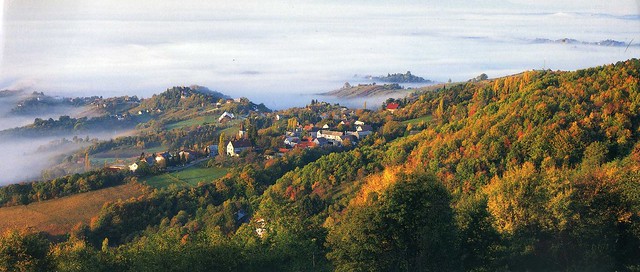
Plešivica is a mountain about 40 kilometres from Zagreb. I couldn't really find much info about it, and it all seems quite confusing as there seems to be different spellings, and I'm not sure if I'm reading about the right place as they are apparently also located in different parts of Croatia... hhhmmmm... In any case, it looks like a really beautiful place, I like the foggy view. :)


The stamp is from a set of 4 stamps issued in 2010, representing Croatian Ethnographic Heritage. This one shows Medimurje.

Wednesday, 1 June 2011

Podgora, Croatia

It's supposed to get really warm here later this week, and in Finland it already is: I just had a txt from my mum saying it's +28 C in the shade! It'd be so nice if it was still like that next week, I much prefer these rare moments of sweating to the usual shivering/freezing. :P ...and on days like that, wouldn't it be great to be somewhere near to a sea? The place in this postcard would do nicely for me.. The Croatian coast looks SO pretty!


Podgora is a small town in the Split-Dalmatia county of Croatia. It is located on the Adriatic coastline of Dalmatia. The town has a population of 1,500 (2001) while the municipality of Podgora (which includes several smaller towns) has a population of about 3,000 (2001).

Podgora has a largely tourism-based economy. With its five hotels, it has four times as many beds as inhabitants. It is located 65 km south of Split and 135 km north of Dubrovnik.

This little fishing village, is mentioned first time in the 19 century as a birth place of Don Mihovil Pavlinović, priest, politician and writer, the first person to speak Croatian in the Dalmatian parliament, seeking the unification of Dalmatia and Croatia. The organized tourism started in Podgora in 1922, when the first hotel "Praha" was built. During the World War II, on September 10, 1942 the Yugoslav Partisans formed the Partisan Navy in Podgora. In 1962 Josip Broz Tito unveiled an impressive monument on a small hill above the port of Podgora, "The wings of a seagull", in remembrance of the World War II events.

Today, Podgora is a modern tourist destination, with favorable climate, the pebbly beaches and cozy bays with the sea which is relatively warm very early in the year. Podgora is an attractive seaside resort from the early spring to the late autumn. Its beautiful landscape, the azure sky and limpid sea make Podgora the peerless beauty spot of the Adriatic. The nature park Biokovo (1776 meters) offers possibilities for mountain biking, climbing and wanderings course. All kinds of water sports such as diving, water-skiing, windsurfing, rowing, waterpolo and swimming are very popular in Podgora. Tennis, football, basketball and mini golf courts are waiting for you. Your pleasure will be increased by the well organized trips to near islands, Dubrovnik, Split or the Krka waterfalls, by the unforgettable morning or evening promenades along the sea or by the romantic fishing expeditions at night.


The stamp is from a miniature sheet of two stamps issued in 2010, with the theme 'minerals'.
Thursday, 20 January 2011

Zagreb, Croatia

The last couple of weeks have been pretty hectic - I got a big translation assignment to do and have been really busy and stressed with it. It's so much bigger than anything I've done before so I think that's the main reason why I have been feeling so nervous about it. Anyway, I'm almost done now so I wanted to update this blog again. :)


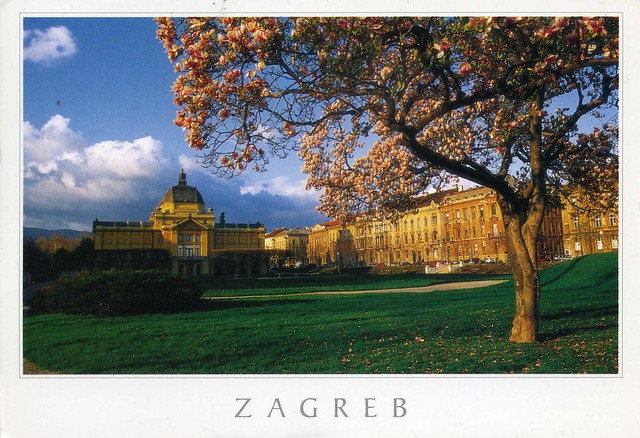
I've been having lots of weird dreams recently. Mostly work-related and some rather unpleasant ones, but a couple of nights ago I had this really beautiful dream where I was taking photos of magnolia blossoms in the snow (as in, there were lots of magnolia trees blossoming but it was also snowing O_o). The part of spring with blossoming trees is one of my favourite times of year, I've been thinking about it recently actually, looking forward to lighter days and spring. We've had some nice, sunny days recently and it's giving me hope. Anyway, that's why I like this card from the lovely Nives so much. It has a blossoming magnolia tree on it! ...or at least it looks like one. I really like the yellow light here, too, so pretty!

Tuesday, 21 December 2010

Zagreb, Croatia

A card from Nives! Thank you dear, it's gorgeous, thank you for sending me a card from my favourites! :)


I was trying to find out what the places/buildings on the card are called, but had no luck... any help would be appreciated!

Friday, 8 October 2010

Bled, Slovenia

More beautiful sceneries, this time from Slovenia. This postcard was sent to me by the lovely Nives, who visited the area recently. I'm jealous! Slovenia is one the most beautiful countries in Europe, and some of the pictures I've seen from there make me think of New Zealand!


Bled is a municipality in northwestern Slovenia in the region of Upper Carniola. The area within the Julian Alps is a popular tourist destination. Bled is known for the glacial Lake Bled, which makes it a major tourist attraction. Perched on a rock overlooking the lake is the iconic Bled Castle. The town is also known in Slovenia for its vanilla-and-cream pastry called kremna rezina or kremšnita.

A small island in the middle of the lake is home to the Assumption of Mary Pilgrimage Church; visitors frequently ring its bell for good luck. Human traces from prehistory have been found on the island. Before the church was built, there was a temple consecrated to Živa, the Slavic goddess of love and fertility. One can get to the island on a traditional wooden row barge called Pletna. The island on Lake Bled has 99 steps. A local tradition at weddings is for the husband to carry his new bride up these steps, during which the bride must remain silent.

Bled Castle is a picturesque white and red castle enclosed by a Romanesque wall with parapets, ramparts, and towers. The current incarnation of the castle dates from the 17th century and was restored in the 1950s.


The card was mailed from Croatia. The stamp was issued in 2005, under the title Croatian cities, this one here being the city of Rijeka.

Saturday, 25 September 2010

Croatia

This is one of my favourite out of the postcards I've received in the last couple of weeks. Lavender fields fascinate me; the purple colour is gorgeous and spread out like that, like a mat, it's just amazing.


I have to confess I didn't know there were lavender fields in Croatia, but according to Agi, who sent me this card, this is a typical Dalmatian view. Lavender fields were in blossom there a few months ago. I wish there were lavender fields around here, too, but I haven't seen any, just an occasional random bush. :(


Isn't the stamp cool?! It's from a set of 3 stamps issued earlier this year, showing Croatian Fruits. This one here is Grape, obviously. I love the unusual round shape and how the colour matches the colours of the postcard. :)

Sunday, 12 September 2010

Rab, Croatia

What did I just say about wishing to be somewhere warm? I can't help it, I'd love to go on holidays more often (and not just in Finland). *sigh* I love receiving holiday cards from friends, and this one is one such card. Nives is one lucky person!


The top of this card is cut in shape like the houses and it was a bit awkward to scan. It's such a lovely card, though, and the views are amazing! Ahhh, I'd love to see all those old houses and walk through those old streets and peek from the city walls!

Rab is an island in Croatia and a town of the same name located just off the northern Croatian coast in the Adriatic Sea.

The island is 22 km long, has an area of 93.6 km² and 9,480 inhabitants (2001). The highest peak is Kamenjak at 408 meters. The northeastern side of the island is mostly barren, karst, while the southwestern side is covered by one of the last oak forests of the Mediterranean.

Ferries connect the island of Rab with the mainland ports of Jablanac and Rijeka, as well as with the neighbouring islands of Krk and Pag.

Sunday, 1 August 2010

Split, Croatia

Another swap card from Croatia, and such a beautiful card, too!


This card shows Split, which is the sender's home town. Split is the largest Dalmatian city, the second-largest urban centre in Croatia, and the seat of Split-Dalmatia County. The city is located on the shores of the Mediterranean, more specifically on the eastern shore of the Adriatic Sea, spreading over a central peninsula and its surroundings, with its metropolitan area including the many surrounding seaside towns as well. An intraregional transport hub, the city is a link to the numerous surrounding Adriatic islands and the Apennine peninsula, as well as a popular tourist destination. On this card you can see the place where a lot of famous people from Split and Dalmatia keep their yachts.

Split is also one of the oldest cities in the area, and is traditionally considered just over 1,700 years old, while archaeological research relating to the ancient Greek colony of Aspálathos (6th century BC) establishes the city as being several hundred years older.

Croatia

I've been doing some private swaps recently, this came from one such swap. It's SUCH a nice map card, too - I love the sea, and the little pictures.


Croatia has a bird like shape, so when you look for it on the map of Europe you just have to remember to look for a bird :) On this card you can also see 6 out of 8 national parks and 6 out of 7 Unesco sites of Croatia. One of my favourite parts of this card is the little wolf, and Dubrovnik looks gorgeous as ever. Croatia seems very much like a hidden gem in Europe - how come it's not so well known (at least not around here)?!


The red stamp on the left was issued in 2008, in a set of 5 stamps portraying Croatian Ethnographic Heritage. This one shows Local Customs from Bistra. The stamp on the right was issued in 2008 under the theme Famous Croats. This stamp commemorates the 125th Anniversary of the birth of Ivan Mestrovic.

Monday, 5 July 2010

Zagreb, Croatia

This postcard is from my postcard pal Nives in Croatia. Croatia looks like a very beautiful country and Zagreb seems like a fascinating city, it would be so interesting to get to visit it one day!


Unfortunately I have no idea what all these buildings on this card are called. Well, the one in the bottom left corner looks like Mimara Museum - I have a single view postcard of it that I received as an official last year. Isn't it beautiful?!

I'd love to know the significance of these little hearts - I've seen them on a number of postscards from Croatia. They are so pretty and give me the impression of a lovely crafty country, but I don't really know what they are... just decorations, or something more?


The stamp is from a set of 4 (very nice!) stamps issued this year, representing Croatian Ethnographic Heritage. This one shows Medimurje (which is a region in Croatia, unless I'm very much mistaken?).

Sunday, 20 June 2010

Krka National Park, Croatia

More outstanding natural beauty, this time from Croatia. This one arrived from a swap with Roberto, but I also have a lovely postcard pal, Nives, there, so I've been fortunate to see glimpses of this beautiful country.


Krka is one of the Croatian national parks, named after the river Krka that it encloses. It is located in central Dalmatia, in Šibenik-Knin county, downstream of Miljevci area and just a few kilometers northeast of the city of Šibenik. It was proclaimed a national park in 1985 and is the seventh national park in Croatia. It is intended primarily for scientific, cultural, educational, recreational, and tourism activities. Due to its special position and the mosaic distribution of various types of habitats, it is characterized by exceptionally rich and varied flora and fauna. Eight hundred and sixty species and subspecies of plants have been identified within the territory of the Krka National Park, including several endemic Illyrian-Adriatic species.

This card shows the beautiful Skradinski buk waterfall. The combined waters of the Krka and Čikola Rivers flow over the 17 steps at Skradinski buk, distributed along the 800 metres in length. The width of the cascades is between 200 and 400 metres with a total height difference of 45.7 metres. Travertine formations in the upper portion of the river include thresholds, travertine islands, draperies and barriers, while the lower portion has caves and tufts. A walking trail has been constructed over the river.


The stamps on the card are very pretty, too. The stamp on the left is from a set of 5 stamps issued in 2008, portraying Croatian Ethnographic Heritage. This one shows Folk costume from Bizovac. The stamp in the middle was issued this year and is from a set of 3 stamps representing Croatian fruits. This one here shows the Woodland strawberry. The stamp on the right was also issued this year and is from a set of 4 stamps depicting famous Croats. The person here is the art historian and university teacher Grgo Gamulin.