Showing posts with label tags. Show all posts

Saturday, 26 March 2016

Bergpark Wilhelmshöhe, Germany

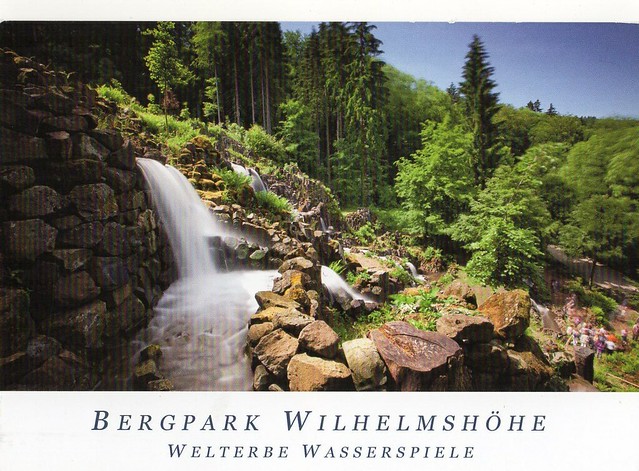
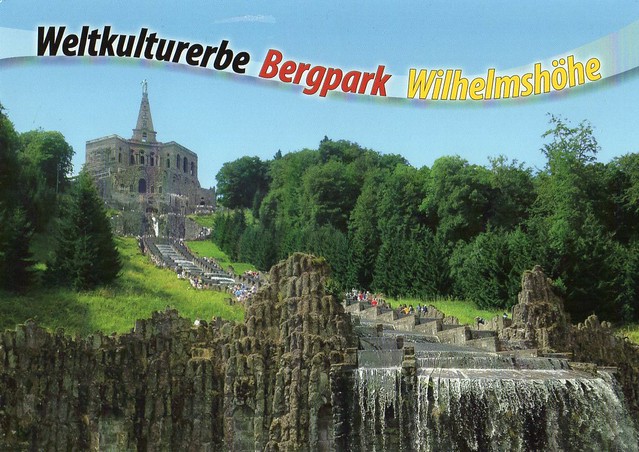
Another Unesco site, this time from Germany. I received two postcards of the same site earlier this year, one from a tag and then shortly after that I received one as an official so I thought I'd include them both here.


This is the first card that I received through a tag on the Postcrossing forum...
 
DE-5057422
 
...and this is the official I then received not long after the first card. It's interesting how the angles are completely different.

Descending a long hill dominated by a giant statue of Hercules, the monumental water displays of Wilhelmshöhe were begun by Landgrave Carl of Hesse-Kassel in 1689 around an east-west axis and were developed further into the 19th century. Reservoirs and channels behind the Hercules Monument supply water to a complex system of hydro-pneumatic devices that supply the site’s large Baroque water theatre, grotto, fountains and 350-metre long Grand Cascade. Beyond this, channels and waterways wind across the axis, feeding a series of dramatic waterfalls and wild rapids, the geyser-like Grand Fountain which leaps 50m high, the lake and secluded ponds that enliven the Romantic garden created in the 18th century by Carl’s great-grandson, Elector Wilhelm I. The great size of the park and its waterworks along with the towering Hercules statue constitute an expression of the ideals of absolutist Monarchy while the ensemble is a remarkable testimony to the aesthetics of the Baroque and Romantic periods.


The stamp on the first card...


...and the second.

Thursday, 24 March 2016

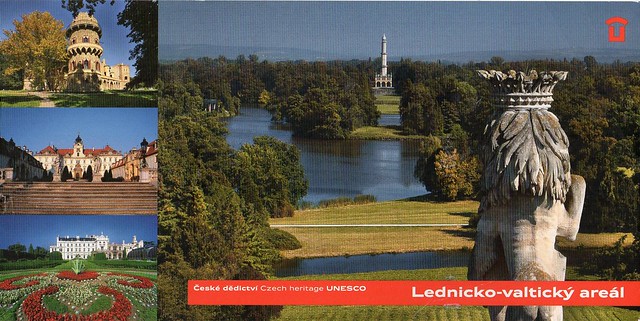
Lednice-Valtice Cultural Landscape, Czech Republic

A Unesco card from Czech Republic from earlier this year.


The Lednice-Valtice Cultural Landscape is a cultural-natural landscape complex of 283.09 square kilometres in the Lednice and Valtice areas of the South Moravian Region, near Břeclav in the Czech Republic. The Lednice-Valtice Area is registered in the list of monuments protected as World Heritage Sites by UNESCO. It is adjacent to the Pálava Landscape Protected Area (Pálava Biosphere Reserve), a WHS registered by UNESCO several years before. The close proximity of two cultural landscapes protected by UNESCO is unique.

Between the 17th and 20th centuries, the ruling dukes of Liechtenstein transformed their domains in southern Moravia into a striking landscape. It married Baroque architecture (mainly the work of Johann Bernhard Fischer von Erlach) and the classical and neo-Gothic style of the castles of Lednice and Valtice with countryside fashioned according to English romantic principles of landscape architecture. At 200 km2 , it is one of the largest artificial landscapes in Europe.

Friday, 19 February 2016

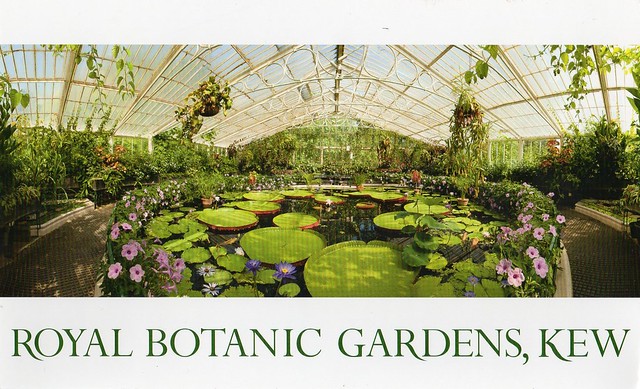
Royal Botanic Gardens, Kew, England

I honestly thought I already had a postcard of Kew Gardens but when I was updating my Unesco postcard list, it wasn't there. I'm missing some other pretty obvious UK sites as well. O_o Well, at least I've got this one now! I've never actually been to Kew Gardens... Last year when my sister came to London and I went to visit her, we did talk about possibly going there, but then just ended up wandering around central London. :p Maybe one day?


Set amongst a series of parks and estates along the River Thames' south-western reaches, this historic landscape garden includes work by internationally renowned landscape architects Bridgeman, Kent, Chambers, Capability Brown and Nesfield illustrating significant periods in garden design from the 18th to the 20th centuries. The gardens house extensive botanic collections (conserved plants, living plants and documents) that have been considerably enriched through the centuries. Since their creation in 1759, the gardens have made a significant and uninterrupted contribution to the study of plant diversity, plant systematics and economic botany.

The landscape design of Kew Botanic Gardens, their buildings and plant collections combine to form a unique testimony to developments in garden art and botanical science that were subsequently diffused around the world. The 18th century English landscape garden concept was adopted in Europe and Kew's influence in horticulture, plant classification and economic botany spread internationally from the time of Joseph Banks' directorship in the 1770s. As the focus of a growing level of botanic activity, the mid 19th century garden, which overlays earlier royal landscape gardens is centred on two large iron framed glasshouses - the Palm House and the Temperate House that became models for conservatories around the world. Elements of the 18th and 19th century layers including the Orangery, Queen Charlotte's Cottage; the folly temples; Rhododendron Dell, boundary ha-ha; garden vistas to William Chambers' pagoda and Syon Park House; iron framed glasshouses; ornamental lakes and ponds; herbarium and plant collections convey the history of the Gardens' development from royal retreat and pleasure garden to national botanical and horticultural garden before becoming a modern institution of conservation ecology in the 20th century.


I wish Royal Mail would cancel stamps on mail... This happens far too often. :(

Saturday, 16 January 2016

Monuments of Oviedo and the Kingdom of the Asturias, Spain

A Unesco card I received from a tag last year. I still don't have too many Unesco cards from Spain... :o


In the 9th century the flame of Christianity was kept alive in the Iberian peninsula in the tiny Kingdom of the Asturias. Here an innovative pre-Romanesque architectural style was created that was to play a significant role in the development of the religious architecture of the peninsula. Its highest achievements can be seen in the churches of Santa María del Naranco, San Miguel de Lillo, Santa Cristina de Lena, the Cámara Santa and San Julián de los Prados, in and around the ancient capital city of Oviedo. Associated with them is the remarkable contemporary hydraulic engineering structure known as La Foncalada.

This card shows the church of St Mary at Mount Naranco (Iglesia de Santa María del Naranco), a Roman Catholic Asturian pre-Romanesque Asturian architecture church on the slope of Mount Naranco situated 3 kilometres from Oviedo, northern Spain. Ramiro I of Asturias ordered it to be built as a royal palace as part of a larger complex that also incorporated the nearby church of San Miguel de Lillo, 100 meters away. It was completed in 848. Its structural features, such as the barrel vault — with transverse ribs corresponding one-to-one with contraforts at the exterior, make it a clear precursor of the Romanesque construction. The exterior decorations, as well as the use of stilted arches mark the intended verticality of the composition. It was converted into a church at the end of the 13th century.


Tuesday, 5 January 2016

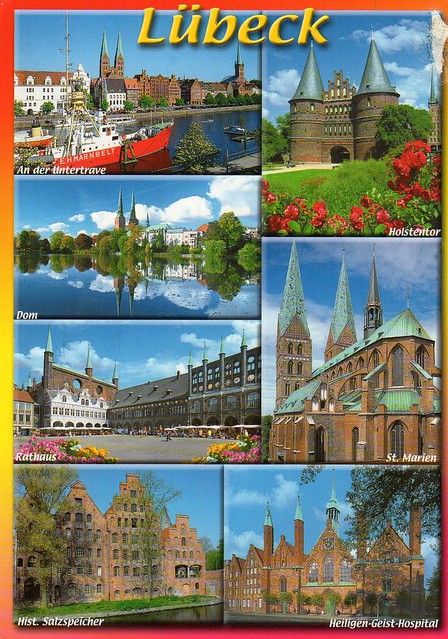
Lübeck, Germany

A Unesco card I received last year. I'm not a huge fan of multi-view cards, but at least you get to see a few different places on this card. :P


Lübeck is a city in Schleswig-Holstein, northern Germany, and one of the major ports of Germany. On the river Trave, it was the leading city of the Hanseatic League and because of its extensive Brick Gothic architecture is listed by UNESCO as a World Heritage Site. In 2005, it had a population of 213,983.

The old part of Lübeck is on an island enclosed by the Trave. The Elbe–Lübeck Canal connects the Trave with the Elbe River. Another important river near the town centre is the Wakenitz. The Autobahn 1 connects Lübeck with Hamburg and Denmark. Travemünde is a sea resort and ferry port on the coast of the Baltic Sea. Lübeck Hauptbahnhof links Lübeck to a number of railway lines, notably the line to Hamburg.

Lübeck is famous for its marzipan industry. According to local legend, marzipan was first made in Lübeck, possibly in response either to a military siege of the city or a famine year. The story, perhaps apocryphal, is that the town ran out of all food except stored almonds and sugar, which were used to make loaves of marzipan "bread". Others believe that marzipan was actually invented in Persia a few hundred years before Lübeck claims to have invented it. The best known producer is Niederegger, which tourists often visit while in Lübeck, especially at Christmas time.

Wednesday, 16 September 2015

sheep, Norway

A random postcard I received last year. I don't really have too much to say about this one except that I really, really like it, and it's always a pleasure to receive a postcard from Catherine in Norway. :)


I do have a bit of a thing for sheep-related postcards, and I think my collection is fairly reasonable. :)

This particular card also has the added bonus of including a stunning view from Norway, what's not to like?!

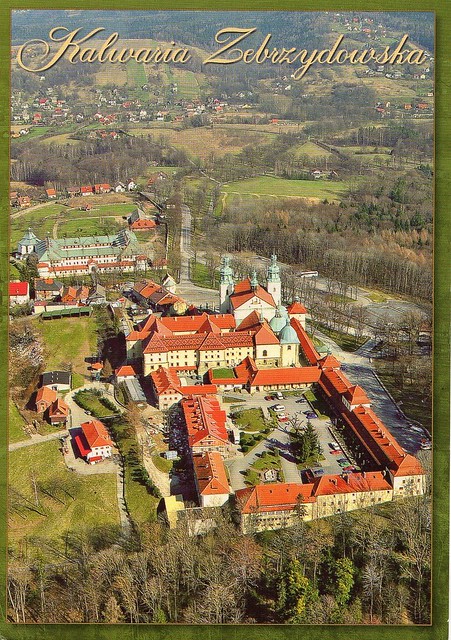
Kalwaria Zebrzydowska, Poland

Another Unesco card, this time from Poland.


Kalwaria Zebrzydowska: the Mannerist Architectural and Park Landscape Complex and Pilgrimage Park

Kalwaria Zebrzydowska is a breathtaking cultural landscape of great spiritual significance. Its natural setting – in which a series of symbolic places of worship relating to the Passion of Jesus Christ and the life of the Virgin Mary was laid out at the beginning of the 17th century – has remained virtually unchanged. It is still today a place of pilgrimage.

Wednesday, 9 September 2015

Hiroshima Electric Railway, Japan

A lovely, lovely card I received through the 'Japan - rest of the world' tag on the Postcrossing forum earlier this year. I love trams (and miss the ones in Helsinki. The local one here is too expensive for me :() and it's fascinating to see the changes throughout the years. I also have a bit of a soft spot for Hiroshima as I used to have a pen friend there years ago. I haven't heard from him for ages now, though, which is a real shame.


Hiroshima Electric Railway Co., Ltd. is a Japanese transportation company established on June 18, 1910, that operates streetcars and buses in and around Hiroshima Prefecture. It is known as "Hiroden" for short.

The company's rolling stock includes an eclectic range of trams manufactured from across Japan and Europe, earning it the nickname "The Moving Streetcar Museum".

Wednesday, 12 August 2015

Pilgrimage Church of Wies, Germany

Getting *really* behind with this blog again so time for an update. ...although I should probably be outside instead as it's such a gorgeous, sunny, warm day. Uh oh...

Today's first card is from the Unesco tag on the Postcrossing forum.


The Pilgrimage Church of Wies is an oval rococo church, designed in the late 1740s by Dominikus Zimmermann, who lived nearby for the last eleven years of his life. It is located in the foothills of the Alps, in the municipality of Steingaden in the Weilheim-Schongau district, Bavaria, Germany.

It is said that, in 1738, tears were seen on a dilapidated wooden figure of the Scourged Saviour. This miracle resulted in a pilgrimage rush to see the sculpture. In 1740, a small chapel was built to house the statue but it was soon realized that the building would be too small for the number of pilgrims it attracted, and so Steingaden Abbey decided to commission a separate shrine. Many who have prayed in front of the statue of Jesus on the altar have claimed that people have been miraculously cured of their diseases, which has made this church even more of a pilgrimage site.

Construction took place between 1745 and 1754, and the interior was decorated with frescoes and with stuccowork in the tradition of the Wessobrunner School. "Everything was done throughout the church to make the supernatural visible. Sculpture and murals combined to unleash the divine in visible form".

There is a popular belief that the Bavarian government planned to sell or demolish the rococo masterpiece during the secularization of Bavaria at the beginning of the 19th century, and that only protests from the local farmers saved it from destruction. Available sources, however, document that the responsible state commission clearly advocated the continuation of Wies as a pilgrimage site, even in spite of economic objections from the abbot of Steingaden.

The Wieskirche was added to the UNESCO World Heritage List in 1983 and underwent extensive restoration between 1985 and 1991.

Wednesday, 22 July 2015

Wooden Churches of Southern Małopolska, Poland

My Unesco collection has been growing slowly. This is one of the cards I've received this year.


The wooden churches of southern Little Poland represent outstanding examples of the different aspects of medieval church-building traditions in Roman Catholic culture. Built using the horizontal log technique, common in eastern and northern Europe since the Middle Ages, these churches were sponsored by noble families and became status symbols. They offered an alternative to the stone structures erected in urban centres. The churches are located in Gorlice, Nowy Targ, Bochnia counties (Lesser Poland Voivodeship or Małopolskie), and Brzozów County (Subcarpathian Voivodeship) and are in Binarowa, Blizne, Dębno, Haczów, Lipnica Dolna, and Sękowa.

The wooden church style of the region originated in the late Medieval, the late sixteenth century, and began with Gothic ornament and polychrome detail, but because they were timber construction, the structure, general form, and feeling is entirely different from the gothic architecture or Polish Gothic (in stone or brick). Later construction show Rococo and Baroque ornamental influence. The form of these Roman Catholic churches is deeply influenced by the Greco-Catholic and Orthodox presence in the region. Some display Greek cross plans and onion domes, but the most interesting of the churches combine these features with the Roman forms with elongated naves and steeples. Other collections of wooden churches of the region are in the open-air museums in Sanok and Nowy Sącz.

Monday, 6 July 2015

Cultural Landscape of Honghe Hani Rice Terraces, China

I used to be fairly active in the 'You choose Unesco WHS' tag on the Postcrossing forum earlier this year but have had to take a break as postage is just ridiculous in the UK now. I can't afford to send too many postcards and friends take priority. Anyway, this is one of the cards I received through that tag. I really like this view, but find it a little odd that the sender didn't write any message on the back of the card. It literally only has my name, address and the name of the tag on. O_o Oh well, the sender must have had their reasons, and the card is still lovely.


The Cultural Landscape of Honghe Hani Rice Terraces, China covers 16,603-hectares in Southern Yunnan. It is marked by spectacular terraces that cascade down the slopes of the towering Ailao Mountains to the banks of the Hong River. Over the past 1,300 years, the Hani people have developed a complex system of channels to bring water from the forested mountaintops to the terraces. They have also created an integrated farming system that involves buffalos, cattle, ducks, fish and eel and supports the production of red rice, the area’s primary crop. The inhabitants worship the sun, moon, mountains, rivers, forests and other natural phenomena including fire. They live in 82 villages situated between the mountaintop forests and the terraces. The villages feature traditional thatched “mushroom” houses. The resilient land management system of the rice terraces demonstrates extraordinary harmony between people and their environment, both visually and ecologically, based on exceptional and long-standing social and religious structures.

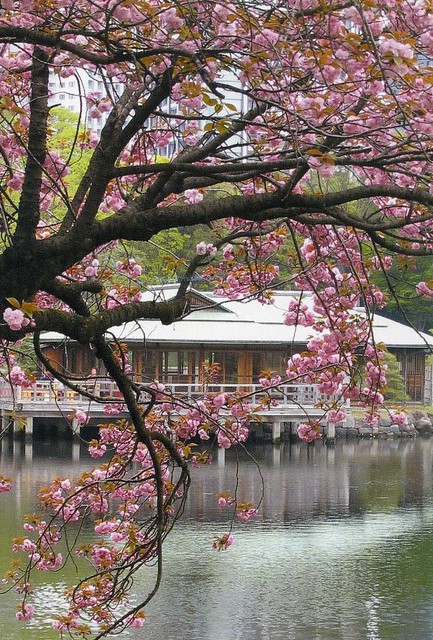
Hama Rikyu Gardens, Tokyo, Japan

A beautiful postcard from Japan from earlier this year. I'd love to get to see the cherry blossoms in Japan one day and experience 'hanami', it looks pretty amazing!


Hama Rikyu Gardens is a public park in Chūō, Tokyo, Japan. Located at the mouth of the Sumida River, it was opened April 1, 1946. The park is a 250,165 m² landscaped garden surrounding Shioiri Pond, the park itself surrounded by a seawater moat filled by Tokyo Bay. It was remodeled as a public garden park on the site of a villa of the Shogun Tokugawa family in the 17th century.


Japanese stamps are SO beautiful, and I love these special cancellations with pictures. I wish you could get nice cancellations in the UK as well... :/

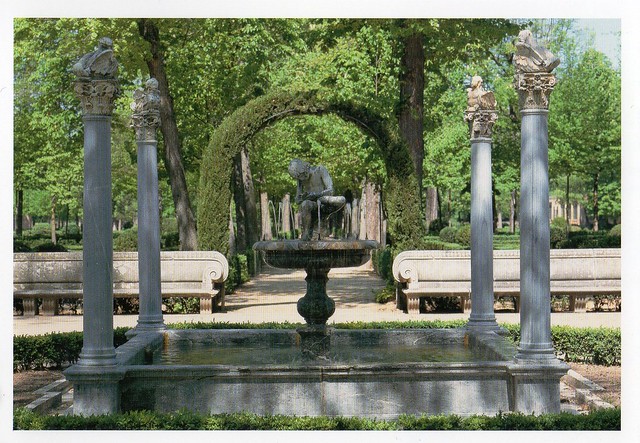
Aranjuez Cultural Landscape, Spain

A lovely Unesco card from Spain I received earlier this year.


The Aranjuez cultural landscape is an entity of complex relationships: between nature and human activity, between sinuous watercourses and geometric landscape design, between the rural and the urban, between forest landscape and the delicately modulated architecture of its palatial buildings. Three hundred years of royal attention to the development and care of this landscape have seen it express an evolution of concepts from humanism and political centralization, to characteristics such as those found in its 18th century French-style Baroque garden, to the urban lifestyle which developed alongside the sciences of plant acclimatization and stock-breeding during the Age of Enlightenment.

Aranjuez cultural landscape is located in the Province and Autonomous Community of Madrid.

Monday, 8 June 2015

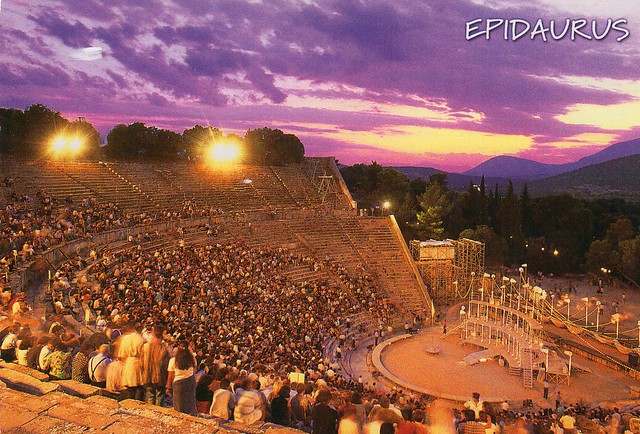
Sanctuary of Asklepios at Epidaurus, Greece

I've been working on my Unesco postcard collection a little lately and have received some very nice new additions to my collection. This is one of them, received earlier this year. Thank you so much, Elena!


In a small valley in the Peloponnesus, the shrine of Asklepios, the god of medicine, developed out of a much earlier cult of Apollo (Maleatas), during the 6th century BC at the latest, as the official cult of the city state of Epidaurus. Its principal monuments, particularly the temple of Asklepios, the Tholos and the Theatre - considered one of the purest masterpieces of Greek architecture – date from the 4th century. The vast site, with its temples and hospital buildings devoted to its healing gods, provides valuable insight into the healing cults of Greek and Roman times.


Friday, 3 April 2015

Akershus, Norway

One more card for today, an absolutely gorgeous view from Norway.


I'm not entirely sure what the exact place on this card is called. On the back of the card it reads "Fløyta, Romeriksåsen, Akershus", but apart from Akershus, I couldn't really find much info.

Akershus is a county in Norway, bordering Hedmark, Oppland, Buskerud, Oslo and Østfold; it also has a short border with Sweden (Värmland). Akershus, with more than half a million inhabitants, is the second largest county by population after Oslo. The county is named after Akershus Fortress. The county administration is in Oslo, which is not part of the county per se.

Tuesday, 31 March 2015

Vyborg, Russia

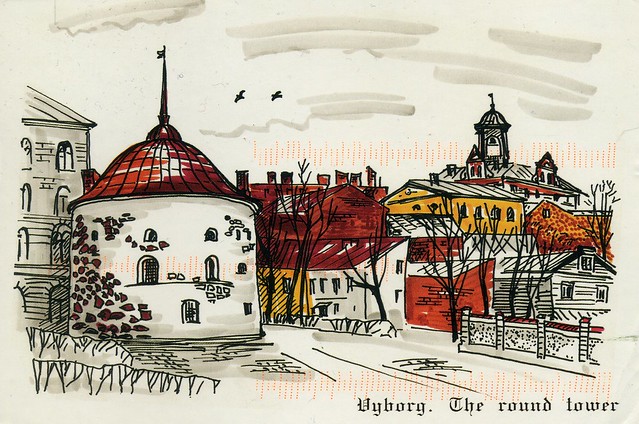
I'm from Lappeenranta, Finland. It's almost right on the Russian border but I've never been to Russia. ...and Vyborg would only be around 60 kilometres from where I've lived most of my life! It's just never happened. It does interest me, but my family aren't too bothered so I doubt I'll ever get to visit. Oh well, I do have a couple of postcards from Vyborg, this painted view being one of them.


Vyborg (Finnish: Viipuri) is a town and the administrative center of Vyborgsky District in Leningrad Oblast, Russia, located on the Karelian Isthmus near the head of the Vyborg Bay, 130 kilometers to the northwest of St. Petersburg and 38 kilometers south of Russia's border with Finland, where the Saimaa Canal enters the Gulf of Finland. Population: 79,962 (2010 Census).

The town lies in the boundary zone between the East Slavic/Russian and Finnish worlds and has changed hands several times in history, most recently in 1944 when it was taken by the Soviet Union from Finland during World War II.

The city hosts the Russian end of the 1,222 km Nord Stream gas pipeline, laid in 2011 and operated by a consortium led by Russia's Gazprom state hydrocarbons enterprise to pump 55 billion cu m of natural gas a year under the Baltic to Greifswald, Germany.

Round Tower, shown on this postcard, is a fortification at the market square of Vyborg. It was built in 1547–1550 by the order of Gustav I of Sweden as a part of the medieval town wall. Today it serves as a restaurant and is one of the most popular sights in Vyborg.

Round Tower was originally an arsenal. It was later used as a prison called "The Mutton Prison", a warehouse and since 1861 by the city magistrate. In 1938, as Vyborg was part of Finland, the tower was renovated for restaurant use after the design of architect Uno Ullberg. Tower's diameter is circa 21 meters.

Sunday, 22 March 2015

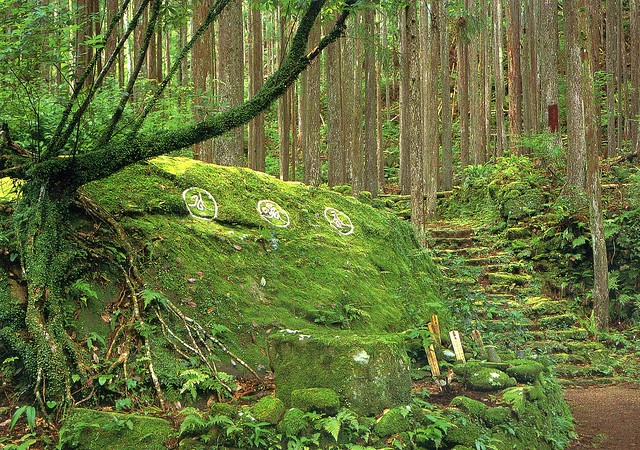
Sacred Sites and Pilgrimage Routes in the Kii Mountain Range, Japan

A lovely Unesco card from Japan I received some time ago. This place looks absolutely gorgeous!


Set in the dense forests of the Kii Mountains on a peninsula in the southernmost part of mainland Japan, overlooking the Pacific Ocean, three sacred sites – Yoshino and Omine, Kumano Sanzan, and Koyasan – are linked by pilgrimage routes to the ancient capital cities of Nara and Kyoto. Together these sites, the connecting pilgrimage routes, and surrounding forests form a cultural landscape that reflect the fusion of Shintoism, rooted in the ancient tradition of nature worship in Japan, and Buddhism, which was introduced from China and the Korean Peninsula. The sacred sites are connected by 307 km of pilgrimage routes which cover a total area of 495.3 ha. With the surrounding forest landscape, they reflect a persistent and extraordinarily well-documented tradition of sacred mountains maintained over 1,200 years.

Saturday, 28 February 2015

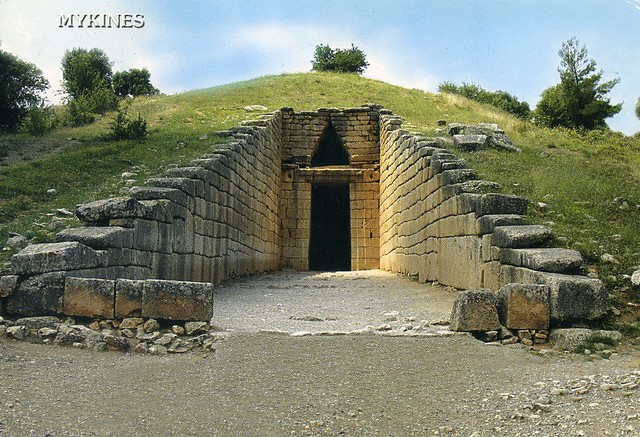
Archaeological Site of Mycenae, Greece

I don't have too many Unesco postcards from Greece... Well, here's one! It's part of the Archaeological Sites of Mycenae and Tiryns.


Mycenae and Tiryns represent the apogee of the Mycenaean civilization, which laid the foundations for the evolution of later European cultures, including classical Greek architecture and urban design, and consequently also on contemporary cultural forms. Moreover, the two sites are indissolubly linked with the Homeric epics, the Iliad and the Odyssey, the influence of which upon European literature and the arts has been profound for more than three millennia.

The Mycenaean civilization developed on the Greek mainland in the late Bronze Age (16th century BC). It was essentially a continuation of the Middle Helladic culture, transformed by Minoan influences from Crete. Knowledge of its two earlier periods I (c . 1580-1500 BC) and II (c . 1500-1400 BC) comes mainly from burials, notably the shaft graves at Mycenae. Towards the end of Period II more elaborate tomb types developed - large chamber tombs for families and beehive-shaped (tholos) tombs for royalty. The apogee of the Mycenaean civilization came in Period III (c . 1400-1120 BC), when strong citadels and elaborate palaces were built. Towards the end of this period a script, known as Linear B, came into use; the language used has been shown to be an early form of Greek, confirming that the Mycenaeans were Greek speakers of Indo-European origin. The political structure was that of an autocratic monarchy, the ruler of which was known as the wanax, who administered his territory by means of a hierarchical structure of officials. There was a special class of priests and priestesses. The people were organized in an elaborate class system, and slavery was widely practised.

The site of Mycenae is known from excavations to have been occupied from the Neolithic period (c . 4000 BC). During the Middle Helladic period a cemetery was established on the southern slopes of the natural hill which included Grave Circle B (dated to the 17th century BC) and Grave Circle A (16th century BC). The Palace was constructed on the summit of the hill and surrounded by massive cyclopean walls in three stages (c . 1350, 1250 and 1225 BC respectively). In the final stage the underground reservoir was also fortified. A series of tholos tombs were built on the southern and south-western slopes of the hill during the Mycenaean period: the so-called Tomb of Aegisthos (c. 1500 BC), the Lion Tholos Tomb (c. 1350 BC), the Tomb of Clytemnestra (c. 1220 BC), culminating in the Treasury of Atreus, at some distance from the others. Four large buildings, believed to have been royal workshops, were built in the 13th century BC in the vicinity of Grave Circle B. The palace was abandoned at the end of the 12th century BC and a number of buildings were damaged by fire. However, the site continued to be occupied until 498 BC, when it was conquered by Argos and its inhabitants were expelled. The top of the hill was levelled at this time for the construction of an Archaic temple. The site was reoccupied briefly in the Hellenistic period, when another temple was built and a theatre constructed over the Tomb of Clytemnestra. By the time the Greek traveller Pausanias visited Mycenae in the 2nd century AD it had been completely abandoned for many years.

Monday, 16 February 2015

Merry Cemetery, Săpânța, Romania

Another random selection of postcards for today... I wonder if I should actually try to come up with themes or something at some point? :P

Anyway, this card arrived last year. I had had it in my favourites for a while so I was really happy to finally receive it.


The Merry Cemetery is a cemetery in the village of Săpânța, Maramureş county, Romania. It is famous for its colourful tombstones with naïve paintings describing, in an original and poetic manner, the persons that are buried there as well as scenes from their lives. The Merry Cemetery became an open-air museum and a national tourist attraction.

The unusual feature of this cemetery is that it diverges from the prevalent belief, culturally shared within European societies – a belief that views death as something indelibly solemn. Connections with the local Dacian culture have been made, a culture whose philosophical tenets presumably vouched for the immortality of the soul and the belief that death was a moment filled with joy and anticipation for a better life.

Sunday, 15 February 2015

Falafel - Israel's national snack

Another postcard from 2009. I'm not sure why I don't post more food and drink related postcards in this blog as I really like them and have a rather large collection of them. Hmm....


I really like falafels but don't have them very often as the fast-food places around here don't really do them and there are no restaurants like that around, either. Maybe I should just make them myself - and NOT use the mixes where you only need to add water and possibly a bit of something else. :P There's a recipe on the back of this postcard which sounds pretty tasty. :P