Sunday, 20 June 2010

Alaska, USA

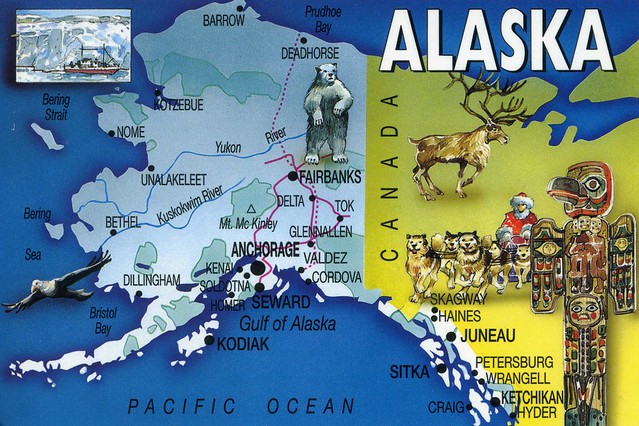
Moving on... From Mexico to its neighbour in the north, the USA. The next two cards come from the northernmost US state, Alaska. Thank you for the swap, Amy!


Alaska is the largest state of the United States by area; it is situated in the northwest extremity of the North American continent, with Canada to the east, the Arctic Ocean to the north, and the Pacific Ocean to the west and south, with Russia further west across the Bering Strait. Approximately half of Alaska's 698,473 residents live within the Anchorage metropolitan area. As of 2009, Alaska remains the least densely populated state of the U.S.


The second card shows Juneau, the state capital of Alaska.

The area of Juneau is larger than that of Rhode Island and Delaware individually and almost as large as the two states combined. Downtown Juneau is nestled at the base of Mount Juneau and across the channel from Douglas Island. As of the 2000 census, the City and Borough had a population of 30,711. The U.S. Census Bureau's 2008 population estimate for the City and Borough was 30,988.

Interesting fact that Amy told me of Juneau: You can only get to and from Juneau by boat or airplane. It's the only US state capital that isn't connected to anywhere else by road.


The stamps are all definitives. The flag with the Statue of Liberty doesn't need any explanation, I believe, but I'm not sure what the animal is...

Day of the Dead

One more card from Cipa in Mexico.. This is also one of my favourites.


Día de Muertos is Spanish for 'Day of the Dead'. It is a holiday celebrated in Latin America and by Latin Americans living in the United States and Canada. The holiday focuses on gatherings of family and friends to pray for and remember friends and family members who have died. The celebration occurs on November 2 in connection with the Catholic holidays of All Saints' Day (November 1) and All Souls' Day (November 2). Traditions connected with the holiday include building private altars honoring the deceased using sugar skulls, marigolds, and the favorite foods and beverages of the departed, and visiting graves with these as gifts. Due to occurring shortly after Halloween, the Day of the Dead is sometimes thought to be a similar holiday, although the two actually have little in common. The Day of the Dead is a time of celebration, where partying is common.

The Day of the Dead celebrations in Mexico can be traced back to the indigenous cultures. Rituals celebrating the deaths of ancestors have been observed by these civilizations perhaps for as long as 2500–3000 years. In the pre-Hispanic era, it was common to keep skulls as trophies and display them during the rituals to symbolize death and rebirth.

The festival that became the modern Day of the Dead fell in the ninth month of the Aztec calendar, about the beginning of August, and was celebrated for an entire month. The festivities were dedicated to the god known as the "Lady of the Dead," corresponding to the modern Catrina.

Xochimilco, Mexico

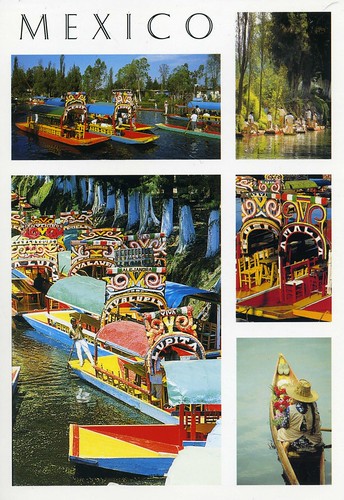
This card is also from Cipa. It shows Xochimilco, one of the sixteen boroughs within Mexican Federal District. It is located within Mexico City, 28 kilometres south of the city center. It is also a Unesco site.


The name 'Xochimilco' comes from the Nahualt (native Mexican language in Aztec times) words: 'xochitl' ('flower'), 'mil' ('field'), 'co' ('place'), so the meaning is 'Place of Flower Field'.

Xochimilco is famous for its canals, and its colourful boats called "Trajineras" which are decorated with flowers. This place is a very touristic attraction, you can hire a trajineara and navigate by the canals, around canals you will find stands which sell flowers and plants.

Mexico City

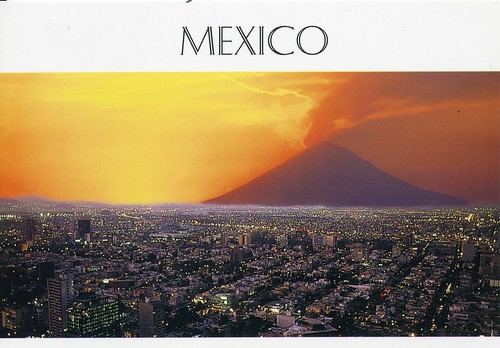
Another card from Cipa. I wasn't originally going to post this one, but I love the story on the back of the card.


There are many versions in popular Mexican culture of supposed accounts of the mountains in Aztec mythology. For instance, in one version Iztaccíhuatl was a princess in an Aztec tribe. When she came of age, her father wanted her to marry an Aztec prince; however, she did not like any of them. One day by chance, she saw a prince named Popocatépetl in the street. He was the prince of a different indigenous tribe in Mexico (the Chichimeca tribe), so when he wrote a letter asking the emperor if he could marry his daughter, the emperor was furious and would not allow it. Iztaccíhuatl insisted on the marriage, though, so the emperor agreed to it on one condition: Popo and his tribe must help the emperor's troops in a war against their enemy. The emperor intended on the prince dying in the war.

Popo and the rest of the Chichimecas joined the Aztecs in war, but the Aztecs abandoned them at the height of the battle. Miraculously, the Chichimecas were still triumphant without the Aztecs' help. Even so, the emperor told his daughter that Popo had died in battle, and he wrote a letter to Popo saying that Iztaccíhuatl had died of sadness in his absence. Popo did not believe the emperor, and sneaked into the palace to reunite with Iztac. Together, they ran away to get married. When the emperor found out, he disowned his daughter and proclaimed she was dead to him.

Iztac and Popo built a humble house and lived happily for a few years. Suddenly, Iztac got sick and died, in spite of Popo's efforts to save her. An earthquake occurred, and two volcanoes formed. A voice from the heavens ordered Popo to bring Iztac's body to the peak of one of the volcanoes. He obeyed and placed Iztac's body on top of a bed of flowers on the volcano. Popo then lay down next to her and waited to die. Years later, snow covered their dead bodies and they became two mountains. Popo became the mountain with smoke, (known as montaña humeante "smoking mountain") and Iztac became the mountain without (known as mujer blanca "white woman"). The two mountains are named after the lovers to this day.

Mexico map

I'll be posting a few more Mexican cards today. I received an envelope full of lovely postcards from Cipa in Mexico, and want to share some of them.


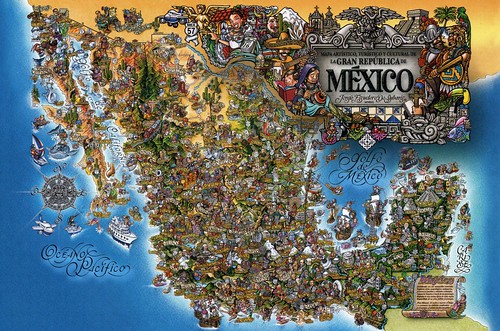
I love map postcards, it's always fun to find new places and little details in them. This is a little different, it's an "artistic, touristic and cultural map of the Great Republic of Mexico". :) Quite hard to read, but I just love this card!


These were the stamps on the envelope. I couldn't find any info about them, but the theme would seem to be human rights.

I'm still a little confused about the cancellations. They are dated 9 June, but Cipa sent the envelope in May! I wonder where the envelope had been all that time... although I think I've heard of this happening with the Mexican post before, so maybe it's not so unusual?

Thursday, 17 June 2010

Chiapa de Corzo, Chiapas, Mexico

I've been doing quite a lot of private swaps recently, this is one of the latest received cards for me. I don't get too much mail from Mexico; I've got a couple of rather old cards that my grandma and her husband sent me when they were on a holiday in Mexico (I think that was probably in the early 1990s). I did get an envelope full of lovely postcards from Mexico a few days ago, but more about that later.


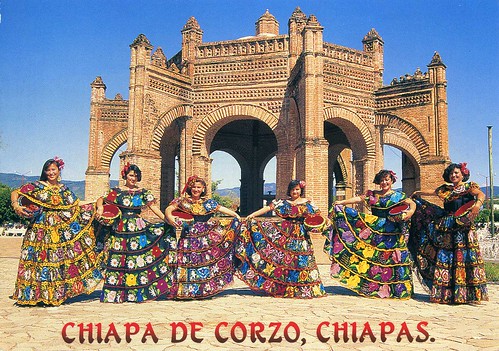
The card shows traditional dresses in Chiapa de Corzo, Chiapas. Chiapa de Corzo is a small city and municipality situated in the west-central part of the Mexican state of Chiapas (the southernmost state of Mexico, located towards the southeast of the country). Located in the Grijalva River valley of the Chiapas highlands, Chiapa de Corzo lies some 15 km to the east of the state capital, Tuxtla Gutiérrez. The city had a 2005 census population of 37,627 and serves as municipal seat of the municipality of the same name, which has an area of 906.7 km² and reported a population of 73,552 inhabitants.

The Chiapas highlands region has been inhabited since at least the Archaic period of Mesoamerican history. The nearby pre-Columbian Mesoamerican archaeological site, also known as Chiapa de Corzo, shows evidence of continual occupation since the Early Formative period ( ca. 1400 BCE). The mounds and plazas at the Chiapa de Corzo archaeological site date to approximately 700 BCE with the temple and palace constructed during the Late Formative, perhaps 400 BCE to 200 CE.

Thank you for the swap, Diego!


I couldn't find any info about the plane stamp, but from what I can tell, it commemorates 100 years of aviation in Mexico.

The City Library, Salt Lake City, USA

I love reading and usually always carry a book with me wherever I go. I also love spending time in libraries, and I love seeing libraries around the world. Postcrossing has been very helpful in this respect, and it's always a treat to receive official cards such as this.


US-723326


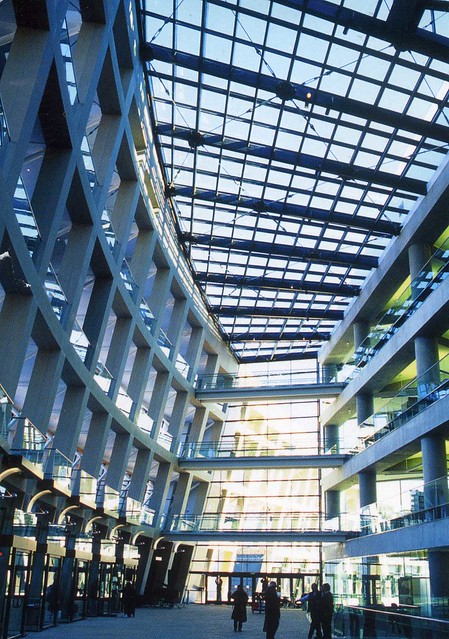
This is the City Library in Salt Lake City, Utah, USA. On the back it says: "Salt Lake City's newest landmark is a truly awe inspiring place for the community to gather, and learn. This new architectural masterpiece was finished in 2003 and will be a place of young and old to celebrate Salt Lake City's culture and diversity."

I found some more info about this library as well:

The Salt Lake City Public Library has been located in a few different places. After celebrating the library's 100th anniversary in early 1998, an $84 million library bond was approved to move the library north half a block to its current location. The firm of Moshe Safdie and Associates and local architects in VCBO Architecture designed the building, which opened to the public on February 8, 2003. The Salt Lake City main library is a 22,300 m² five-story tall, wedge-shaped building. The library has a collection of over 500,000 books as well as subscriptions to over 60 newspapers and magazines and 163 internet capable computers. The whole library depends on natural lighting, reducing the need of lights in the library. A huge five story glass wall is where most of the light comes from.

Kiipsaare Daymark, Estonia

Another lighthouse from Estonia...


Info from the back of the card:

KIIPSAARE DAYMARK on the Harilaid Peninsula, Saaremaa Island, Estonia
Height from bottom 25 m
The lighthouse (1933), inactive today, is famous for its leaning tower and scenic location.
The wave erosion has severely undermined the basement of the tower, as a result, it has become inclined seaward.


I can't help feeling jealous that people in so many countries can still get hold of old stamps. Here in the UK it's difficult to find anything that was issued over a year ago. :( Anyway, here the stamp on the left is a commemorative stamp issued in 2000, celebrating the Tallinn Zoo. The animal is the Amur Long-Tailed Goral. The stamp on the right was issued in 2008 and shows the Kalvi Hall manor hall on the high North Estonian limestone coast.

Lost Persons Area

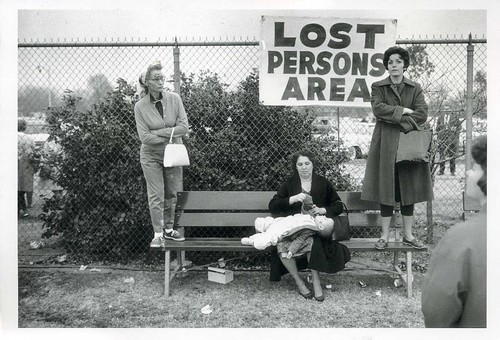
This fun card arrived from a tag from Jitka in Czech Republic a couple of days ago.


I hadn't heard of Elliott Erwitt before but I had to check him out now. He seems like my kind of photographer, too. :) You can find out more here.

Hhmmmm, I wonder when I'm going to lost myself as well.. I wouldn't be too surprised :P


Isn't it a beautiful stamp?! It's from a set of 2 stamps issued this year, celebrating the 150th anniversary of the birth of Alphonse Mucha.

Tuesday, 15 June 2010

Panama

I might have mentioned that I don't get too many officials from smaller countries... Well, yesterday was a lovely exception - I found a postcard from Panama amongst my mail!
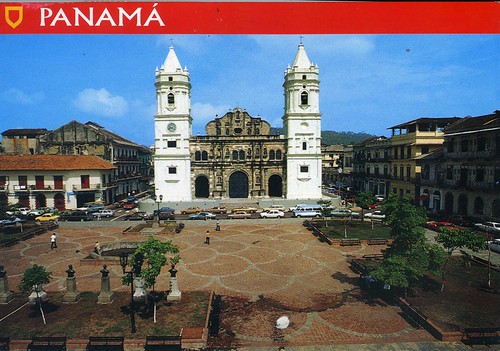

PA-164


The funny thing is, I recently arranged a private swap from Panama and at first I thought this was the swap card (it would've arrived really quickly!). ...until I noticed there was a postcard ID on the card. Mmmhh, this is my first written and stamped postcard from Panama - I think I have one that was sent from the USA, and one unwritten card.

On the card you can see Panama City Cathedral and square. Freddy, who sent me the card, tells me that the Cathedral was built between 1688 and 1796. I did some research online and also found the following:

The Cathedral is located in the old quarter of the city (also commonly referred to as "Casco Viejo", "Casco Antiguo" or "San Felipe"). Panamá was the first European settlement on the Pacific coast of the Americas, in 1519, and the Historic District preserves intact a street pattern, together with a substantial number of early domestic buildings, which are exceptional testimony to the nature of this early settlement. Therefore, Casco Antiguo was designated a World Heritage Site. After the first settlement was destroyed by diseases and the pirate attacks, the last and most remembered one by Henry Morgan, the city moved into a rocky peninsula that was both healthier and easier to defend. In 1673 they founded what today is called officially Casco Antiguo, but is also known as San Felipe, Catedral and more commonly, Casco Viejo.

Currently under a revitalization process, Casco Antiguo is a mix of different architectural styles, which reflects the cultural diversity of the country. Caribbean, Republican, Art Deco, French and Colonial mix in a site of less than 800 buildings. Most of Panama´s City´s main monuments are located in Casco Antiguo, including the Salón Bolivar, the main Cathedral (Catedral Metropolitana), the National Theatre (founded in 1908), and Las Bovedas Monument.

Panama City (Spanish: Panamá) itself is the capital and largest city of the Republic of Panama. It has a population of 813,097, with a total metro population of 1,206,792, and it is located at the Pacific entrance of the Panama Canal.


The stamps are lovely, too. The bottom one is from a set of 4 stamps issued in 2007, representing the Red-backed squirrel monkey. The one in the middle is from a set of 4 stamps issued in 2002, representing Corals of Panama, this one showing Montastraea annularis Ellis and Solander. The stamp on top is also from a set of 4 stamps issued in 2002, representing Artistic Treasures of the Palace "Las Garzas".
North Uist, Scotland

Another card from the Western Islands in Scotland and also from Sarah (who doesn't seem to be active on postcrossing anymore :( ). I received this one last year as well, but it's such a lovely card that it definitely deserves a spot here. :)


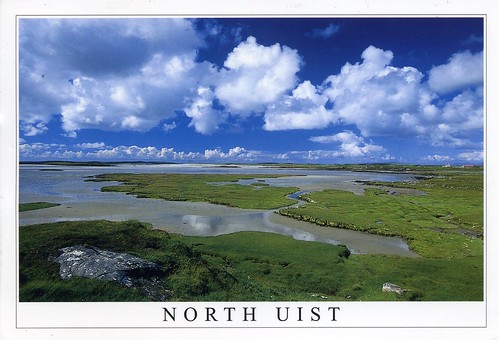
This card shows Vallay Strand in North Uist. Uist (or The Uists) are the central group of islands in the Outer Hebrides of Scotland. The Outer Hebrides is a chain of more than 100 islands and small skerries located about 70 kilometres west of mainland Scotland. There are 15 inhabited islands in this archipelago, which is also known as the Western Isles and archaically as the Long Isle.

Lewis and Harris is the largest island in Scotland and the third largest in the British Isles, after Great Britain and Ireland. It incorporates Lewis in the north and Harris in the south, both of which are frequently referred to as individual islands, although they are joined by a land border. The largest settlement in Lewis and in the Outer Hebrides is Stornoway.

The Outer Hebrides had a population of 26,502 in 2001. The area has historically been a strong Scottish Gaelic (Gàidhlig) speaking area. Despite recent declines, in the 2001 census more than 50% of the resident population in each island was able to speak Gaelic, for an overall total of 15,842 speakers throughout the archipelago. The modern economy centres on tourism, crofting, fishing, and weaving, the latter of which includes the manufacture of Harris tweed. The archipelago is exposed to wind and tide, and there are numerous lighthouses as an aid to navigation.

Monday, 14 June 2010

St Kilda, Scotland

I thought I'd throw in a random card as I'm currently transferring (a ton of) photos from my laptop to an external harddrive, and it's taking ages. :S I received this card last year and it's still one of my favourites. It's very beautiful, AND it's from Scotland and a Unesco site as well.


This volcanic archipelago, with its spectacular landscapes, is situated off the coast of the Hebrides and comprises the islands of Hirta, Dun, Soay and Boreray. It has some of the highest cliffs in Europe, which have large colonies of rare and endangered species of birds, especially puffins and gannets. The archipelago, uninhabited since 1930, bears the evidence of more than 2,000 years of human occupation in the extreme conditions prevalent in the Hebrides. Human vestiges include built structures and field systems, the cleits and the traditional Highland stone houses. They feature the vulnerable remains of a subsistence economy based on the products of birds, agriculture and sheep farming.

You can read more about St Kilda here. Sarah, who sent me this card, told me that she can see this place on the horizon from her village!


The stamp is from a set of 6 stamps representing Cathedrals, issued in 2008. This one shows the Lichfield Cathedral.