Saturday, 30 April 2016

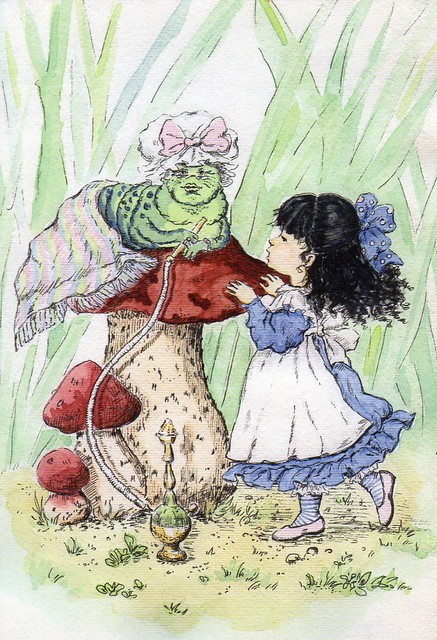
Alice in Wonderland and another Russian Postcrossing stamp

I had no idea the Russian post had issued ANOTHER Postcrossing stamp until someone posted an offer on the Postcrossing forum and obviously I couldn't resist. :P So many countries seem to be issuing Postcrossing stamps now, I wonder if there's a list or something of upcoming releases in other countries? I'm sure the Dutch post will be issuing a second set as well, or have they already done that?? I haven't been very active in Postcrossing recently and haven't sent that many cards for a while. It's just too expensive, and it doesn't help that stamp prices went up in the UK recently.

Anyway, thank you so much for swapping, Elena!


I know the postcard isn't Postcrossing-related or even a viewcard.. but I've got a bit of a soft spot for Alice in Wonderland, and I love seeing different illustrations from different countries. The artist here is named Oksana Vostrikova.

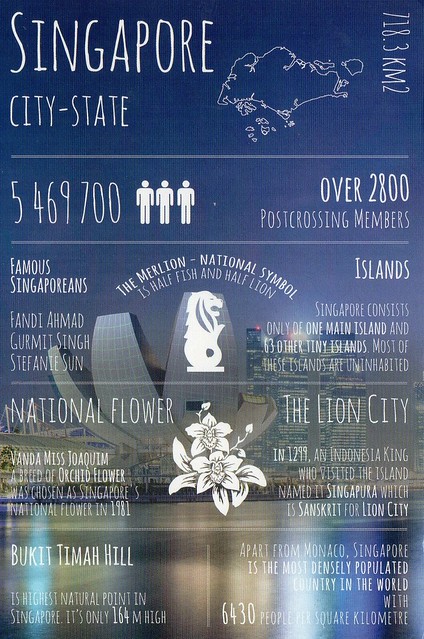
Greetings from Singapore

Today's Greetings from... postcard comes from Singapore. I'm not sure how I feel about this one, the blue and the gray seem a little cold to me...


The background picture here is the Art-Science Museum at Marina Bay area, a bay located in the Central Area of Singapore surrounded by the perimeter of four other planning areas, the Downtown Core, Marina East, Marina South and Straits View. The area surrounding the bay itself, also called Marina Bay, is a 360 hectare extension to the adjacent Central Business District.

I've got to admit, Singapore kind of fascinates me, I'd love to visit the country one day. I mean, I can't help wondering how it would be like to live in a country that basically comprises of one city?!

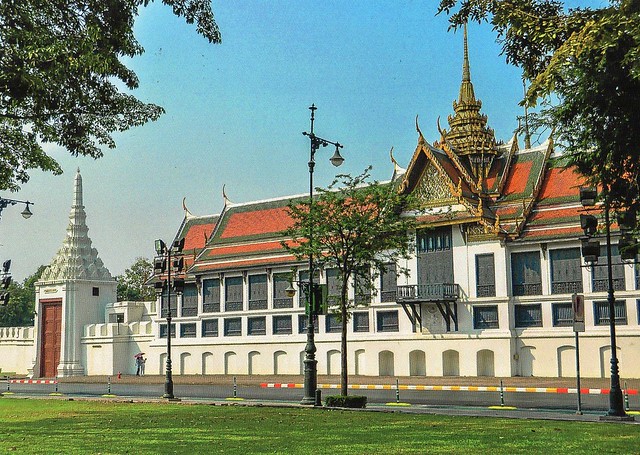
Bangkok, Thailand

May is almost here... it's May Day tomorrow! It's a little difficult to believe at the moment - we've had snow and hail stones a few times this week! :O I could understand that happening in Finland, but England?!? I'm not impressed, and not sure if it's because of the rubbish weather that I haven't been feeling too great for about a week now and have a sore throat. It's been feeling so raw at times that it's been painful to talk. :/ I've said this so many times but I certainly wouldn't mind being somewhere sunny and warm at the moment. :P ...such as Thailand, maybe? I received this card from Jobbo last year. Thank you ever so much for yet another great postcard!


I have no idea if this building is of any importance or what it's called.. There's no info on the back of the card. It does look pretty impressive.

Sunday, 3 April 2016

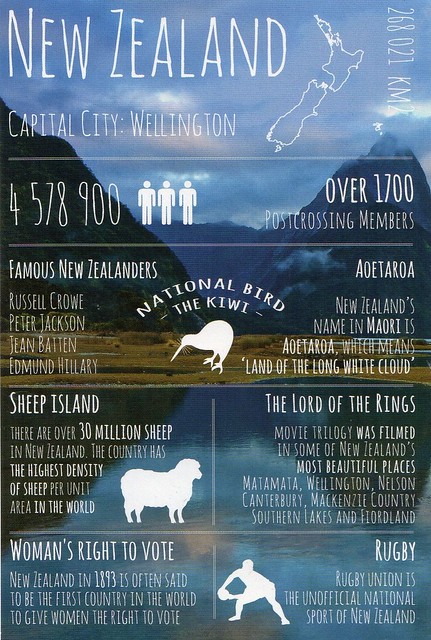
Greetings from New Zealand

Just one more card for today, a 'greetings from' one from New Zealand.


Mentioning the Lord of the Rings movie trilogy was probably a very obvious choice here?? I do love the trilogy, they are some of my all-time favourite movies and I still remember when they came out and the anticipation for the next film... and then the extended edition dvd boxes and all the extras on those and watching them with friends. It almost got to the point where the extras were my favourite part :D Most dvds/blue rays still don't come anywhere close. Ahhh, good times! I'm getting nostalgic here... :p

 I do wonder why the kiwi fruit isn't mentioned here.. but at least the sheep are included! ;)

Helsinki, Finland

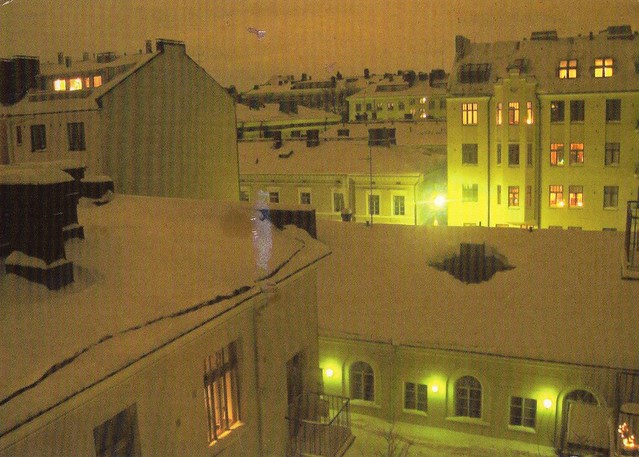
A lovely snowy view from Finland I received last year. I love the atmosphere here, it seems magical somehow.. and cozy at the same time.


The picture is from the Kruununhaka neighbourhood in southern Helsinki. It's one of the more affluent, fancy areas of Helsinki. According to Wikipedia, the area is known for its vintage shops??!


I LOVE the stamp! It was kind of why this swap got arranged in the first place... :D
Just a small post for today as it's late already and I was hoping to have an early night... I managed to spend today mostly doing nothing that exciting - washing a lot of clothes ready to take to a charity shop (finally doing some clearing and getting rid of stuff I don't need/use), catching up on my favourite tv shows...

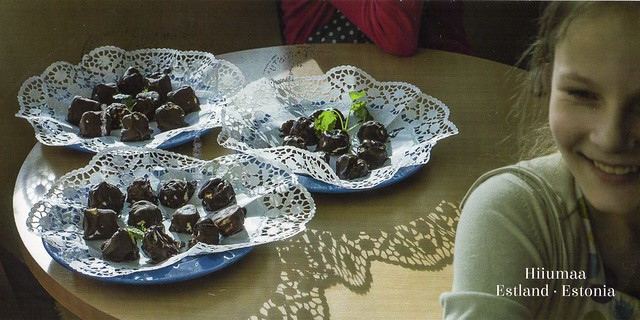
This card arrived from dear Rita last month. Such perfect timing, too, as I had been looking for something tasty to make for Easter. There's a recipe for these quark bites at the back of the card and I was dying to give them a try. I was hoping they would be like the 'kohuke' quark bars I bought in an Estonian shop in Finland last year. They were sooo good, but none of the grocery shops here selling Eastern European foods sell them :( Alas, they were not quite the same, but still very, very tasty and moreish. ...although I had to keep them in the freezer as they would've melted too much in the fridge (I couldn't have eaten them all in one go :P).


You'll need: 

200 g quark 
2 tablespoons sugar 
a dash of vanilla extract 
50 g butter 
100 g dark chocolate 
50 g whipping/double cream 

Mix the quark, soft butter, sugar and vanilla. Put the mixture into cupcake cases (I used paper cases but silicone ones might work better... although I'd recommend using fairly small ones!!) and freeze. Melt the chocolate with the cream. Dip the frozen quark bites into the chocolate, cool in the fridge (and store in the freezer?! ... in that case just let them soften for a bit before eating). 
 

Saturday, 26 March 2016

Ljubljana, Slovenia

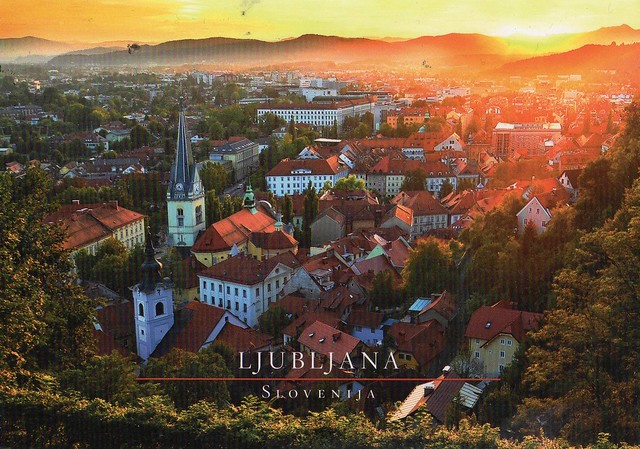
This is such an amazing view, I love this card! Ljubljana looks really idyllic anyway, and then you have this amazing light here. This card had been in my favourites for a while so I was really happy when Nusa offered to swap with me. ...and she used the Slovenian Postcrossing stamp on the card, too!


Ljubljana is the capital and largest city of Slovenia. During antiquity, it was the site of a Roman city called Emona. It was under Habsburg rule from the Middle Ages until the dissolution of the Austro-Hungarian Empire in 1918.

 Situated at the middle of a trade route between the northern Adriatic Sea and the Danube region, it was the historical capital of Carniola, a Slovene-inhabited part of the Habsburg Monarchy, and it has been the cultural, educational, economic, political, and administrative center of independent Slovenia since 1991. Its central geographic location within Slovenia, transport connections, concentration of industry, scientific and research institutions and cultural tradition are contributing factors to its leading position.

The city's architecture is a mix of styles. Despite the appearance of large buildings, especially at the city's edge, Ljubljana's historic center remains intact. Although the oldest architecture has been preserved from the Roman period, Ljubljana's downtown got its outline in the Middle Ages. After the 1511 earthquake, it was rebuilt in the Baroque style following Italian, particularly Venetian, models. After the quake in 1895, it was once again rebuilt, this time in the Vienna Secession style, which today is juxtaposed against the earlier Baroque style buildings that remain. Large sectors built in the inter-war period often include a personal touch by the architects Jože Plečnik and Ivan Vurnik. In the second half of the 20th century, parts of Ljubljana were redesigned by Edvard Ravnikar.

Zaragoza, Spain

A surprise from dear Ana from her travels. :) Thank you so much, it's always so nice to hear from you and I love reading about your journeys! ^_^


Zaragoza, also called Saragossa in English, is the capital city of the Zaragoza province and of the autonomous community of Aragon, Spain. It lies by the Ebro river and its tributaries, the Huerva and the Gállego, roughly in the center of both Aragon and the Ebro basin.

 On 1 September 2010 the population of the city of Zaragoza was 701,090, within its administrative limits on a land area of 1,062.64 square kilometres, ranking fifth in Spain. It is the 32nd most populous municipality in the European Union. The population of the metropolitan area was estimated in 2006 at 783,763 inhabitants. The municipality is home to more than 50 percent of the Aragonese population. The city lies at an elevation of 199 metres above sea level.

 Zaragoza hosted Expo 2008 in the summer of 2008, a world's fair on water and sustainable development. It was also a candidate for the European Capital of Culture in 2012.

The city is famous for its folklore, local gastronomy, and landmarks such as the Basílica del Pilar, La Seo Cathedral and the Aljafería Palace. Together with La Seo and the Aljafería, several other buildings form part of the Mudéjar Architecture of Aragon which is a UNESCO World Heritage Site. The Fiestas del Pilar are among the most celebrated festivals in Spain.

...I feel so stupid for only just having realised that this is (it is, right?!) a Unesco site as well - part of the Mudejar Architecture of Aragon. Just a bit from the Unesco website, then:  

The development in the 12th century of Mudejar art in Aragon resulted from the particular political, social and cultural conditions that prevailed in Spain after the Reconquista. This art, influenced by Islamic tradition, also reflects various contemporary European styles, particularly the Gothic. Present until the early 17th century, it is characterized by an extremely refined and inventive use of brick and glazed tiles in architecture, especially in the belfries. 
 

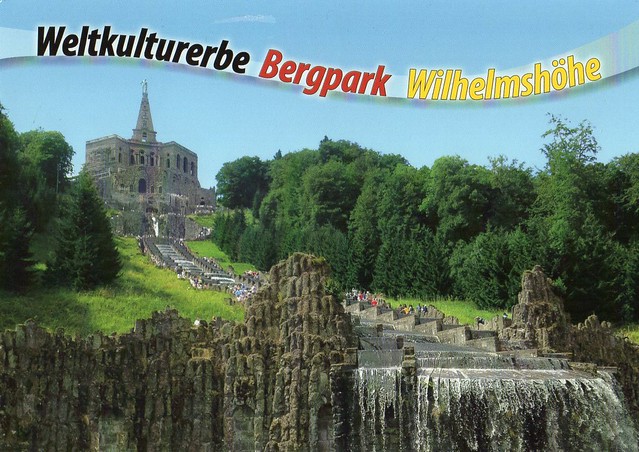
Bergpark Wilhelmshöhe, Germany

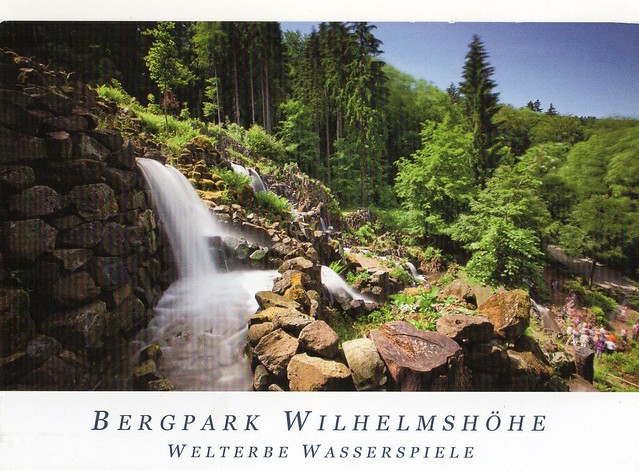
Another Unesco site, this time from Germany. I received two postcards of the same site earlier this year, one from a tag and then shortly after that I received one as an official so I thought I'd include them both here.


This is the first card that I received through a tag on the Postcrossing forum...
 
DE-5057422
 
...and this is the official I then received not long after the first card. It's interesting how the angles are completely different.

Descending a long hill dominated by a giant statue of Hercules, the monumental water displays of Wilhelmshöhe were begun by Landgrave Carl of Hesse-Kassel in 1689 around an east-west axis and were developed further into the 19th century. Reservoirs and channels behind the Hercules Monument supply water to a complex system of hydro-pneumatic devices that supply the site’s large Baroque water theatre, grotto, fountains and 350-metre long Grand Cascade. Beyond this, channels and waterways wind across the axis, feeding a series of dramatic waterfalls and wild rapids, the geyser-like Grand Fountain which leaps 50m high, the lake and secluded ponds that enliven the Romantic garden created in the 18th century by Carl’s great-grandson, Elector Wilhelm I. The great size of the park and its waterworks along with the towering Hercules statue constitute an expression of the ideals of absolutist Monarchy while the ensemble is a remarkable testimony to the aesthetics of the Baroque and Romantic periods.


The stamp on the first card...


...and the second.

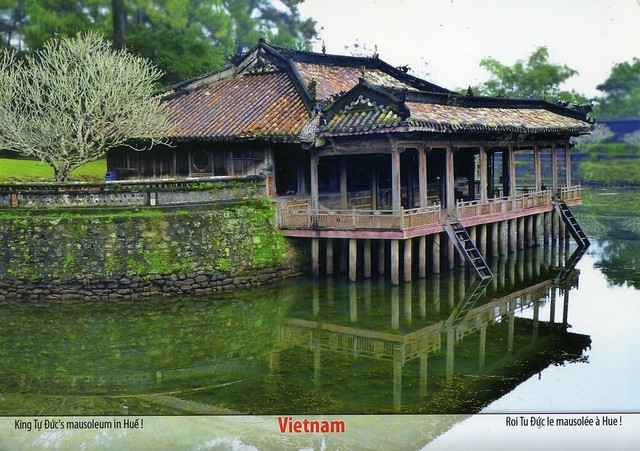
Complex of Hué Monuments, Vietnam

A lovely Unesco card from Vietnam I received a couple of years ago.


The Complex of Hue Monuments is located in and around Hue City in Thua Thien-Hue Province in the geographical centre of Vietnam and with easy access to the sea. Established as the capital of unified Vietnam in 1802 CE, Hue was not only the political but also the cultural and religious centre under the Nguyen Dynasty, the last royal dynasty of Vietnamese history, from 1802 to 1945 CE.

The plan of the new capital is in accordance with ancient oriental philosophy, and respected the physical conditions of the site.

The Ngu Binh Mountain (known as the Royal Screen) and the Perfume River, which runs through the city, give this unique feudal capital an entire setting of great natural beauty as well defining its symbolic importance. The site was chosen for a combination of natural features – hills representing a protective screen in front of the monuments or taking the role of “a blue dragon” to the left and “a white tiger” to the right – which shield the main entrance and prevent the entry of malevolent spirits. Within this landscape, the main features of the city are laid out.

The structures of the Complex of Hue Monuments are carefully placed within the natural setting of the site and aligned cosmologically with the Five Cardinal Points (centre, west, east, north, south), the Five Elements (earth, metal, wood, water, fire), and the Five Colours (yellow, white, blue, black, red).

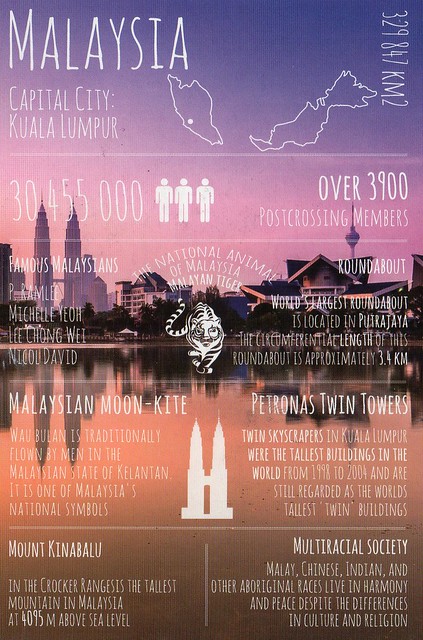
Greetings from Malaysia

Now, I honestly thought I'd already posted about this card in this blog. Turns out I haven't... hhmmmm. I ended up receiving two copies of this card, too, and I'll include the stamps of both of them here as they are both really nice, and one of them has really nice decorations on the back as well. I kind of wish I had that much inspiration when writing my cards!


Matthew points out that Malaysia is the only country that has land on both mainland Asia and Malay archipelago. It does make for a pretty interesting map!

 I also love the bit about multiracial society here. I was talking to my parents in Finland yesterday and some of the things we discussed made me pretty sad. I'd already read some of it in the news and just can't believe some people would be so horrible. Some Finns (and other nationals) could learn a thing or a few from Malaysia!


The stamps on the first card (from Matthew)...


...and the back of the second card. Isn't this lovely?!

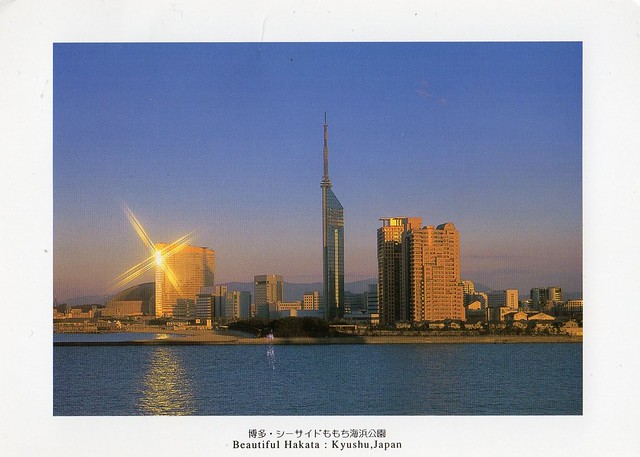
Fukuoka, Japan

This is one of those cards again where I'm having slight problems with trying to identify the exact place on the card. ...or the text on the card just confuses me.. :P It says 'Hakata' on the front, but really it's Fukuoka (Hakata is a ward in Fukuoka). Anyway... This card was sent by Susanna, who was staying in Fukuoka as an exchange student last year and earlier this year (I *think* she's back in Finland now??).


Hakata-ku is a ward of the city of Fukuoka in Fukuoka Prefecture, Japan. Many of Fukuoka Prefecture and Fukuoka City's principal government, commercial, retail and entertainment establishments are located in the district. Hakata-ku is also the location of Fukuoka's main train station, Hakata Station, Fukuoka Airport and the Hakata Port international passenger ship terminal.

This card shows Fukuoka Tower among other things. Fukuoka Tower is a 234-metre tall tower located in the Momochihama area of Fukuoka, Japan. It is the tallest seaside tower in Japan. Fukuoka Tower was finished in 1989, taking a total of 14 months to build at a cost of ¥6,000,000,000 (roughly US $50,000,000 in 2015 terms). It was designed by Nikken Sekkei. Fukuoka Tower has three observation decks: one at 116 m, a café/lounge deck at 120 m, and the highest at 123 metres above the ground. The tower also has a triangular cross-section which is covered with 8000 half-mirrors. Because of this, it has been given the nickname "Mirror Sail".

Fukuoka is the capital city of Fukuoka Prefecture and is situated on the northern shore of the island of Kyushu in Japan. It is the most populous city on the island, followed by Kitakyushu. It is the largest city and metropolitan area west of Keihanshin. The city was designated on April 1, 1972, by government ordinance. Greater Fukuoka, with 2.5 million people (2005 census), is part of the heavily industrialized Fukuoka–Kitakyushu zone as well as Northern Kyushu.

As of July 2011, Fukuoka is Japan's sixth largest city, having passed the population of Kyoto. Since the founding of Kyoto in 794, this marks the first time that a city west of the Kinki region has a larger population than Kyoto. In ancient times, however, the area near Fukuoka, the Chikushi region, was thought by some historians to have possibly been even more influential than the Yamato region.