Saturday, 29 January 2011

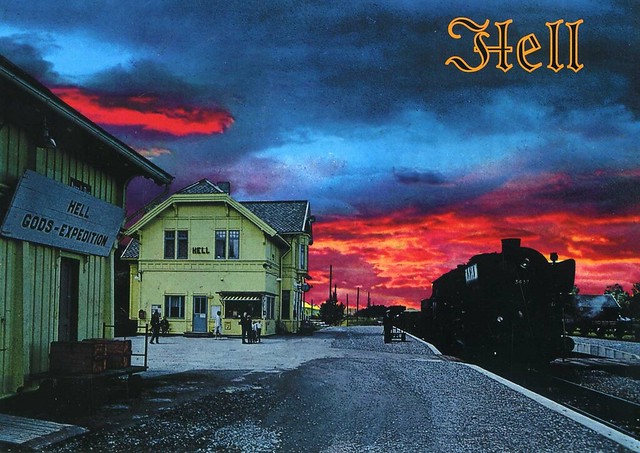
Hell, Norway

One more card for today.. a postcard from Hell!


I had this postcard in my favourites for a very long time, I'm so happy to finally have it! It's not mailed directly from Hell (now there's a sentence I never thought I would write :D), but it's still a treasure, and a very beautiful card with the strong colours of the sunset.

Hell is a village in Lånke, Stjørdal, Norway with a population of about 1500 people. It has become a minor tourist attraction because of its name, as visitors often have their photograph taken in front of the station sign. The station sign reads "Gods-expedition", an archaic Norwegian spelling of the word for "cargo handling" - godsekspedisjon would be the current spelling.

The name Hell stems from the Old Norse word hellir, which means "overhang", "cliff cave". The Norwegian word hell in its everyday usage means "luck", in any way pronounced. The Old Norse word Hel is the same as today's English Hell, and as a proper noun, Hel was the ruler of Hel. In modern Norwegian the word for hell is helvete.

The station itself, Hell Station, is situated at a railway junction where the rail line Nordlandsbanen north to Bodø branches off from Meråkerbanen between Trondheim and Storlien in Sweden. Hell station is currently a manned railway station.

Hell is a post town with two post codes: 7517 for delivery route addresses and 7570 for P. O. Boxes. Hell currently has a grocery store, gas station and a retirement home (ah yeah, you could retire in Hell!).

It's a bit unnerving how much the Hell railway station reminds of the railway station in Savonlinna. It looks quite similar, but the one in Savonlinna has been closed for years now. I don't know if things have changed since I moved away, but I remember when they closed it, it became very difficult to buy train tickets as the Finnish state-owned railway company refused to install a ticket machine there. You could buy tickets from a kiosk there if I remember correctly, but they charged a fee to do that, and it had to be done a few days in advance, same as with buying a ticket online (and what were you supposed to do if you didn't have a printer?!). I would usually just buy my ticket on the train as it still cost the same, but that wasn't always ideal as that way you couldn't get a guaranteed seat in the second, much busier train. I'm SO glad I don't live in Savonlinna anymore, although overall I much prefer the Finnish railway network to the system here in the UK, over here it's a total mess and I can hardly ever afford trains over here.


Anyway, back to the postcard... The stamp is from a set of 6 stamps issued in 2009 with the theme Tourism. The stamp here shows Stottafjorden in Meloy, Nordland.

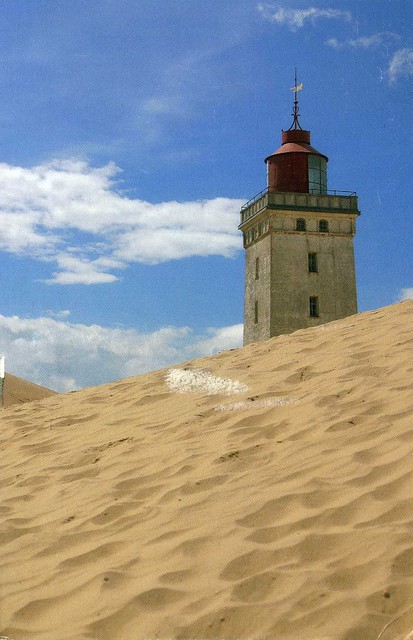
Rubjerg Knude Lighthouse, Denmark

I don't have many postcards from Denmark, which is a little strange considering it's so near to Finland. I know in Sweden postage is really expensive, which has to be one of the reasons why there aren't many postcrossers there, but I don't know what the case with Denmark is? Maybe the stamp prices again - I just did a quick online conversion and it seems like it cost almost one pound to mail this card. Geez...! Well, this very nice official arrived earlier this week, thank you Rita!


DK-13804


Rubjerg Knude Lighthouse in Jutland Denmark started life on December 27, 1900 (construction started in 1899). The lighthouse is on the top of Lønstrup Klint (cliff), 60 metres above sea level. Until 1908 it operated on gas which it produced from a gasworks on the site. It ceased to operate on August 1, 1968.

Shifting sands and coastal erosion led to the buildings being abandoned in 2002. Prior to their abandonment, the buildings had been used as a museum and coffee shop. The small buildings are now partially buried in sand, and by 2009 the small buildings had been severely damaged by the pressure of the sand.


The stamp is from a set of 2 stamps issued in 2010, depicting Nordic Coastlines. This one here is the Port of Aarhus.

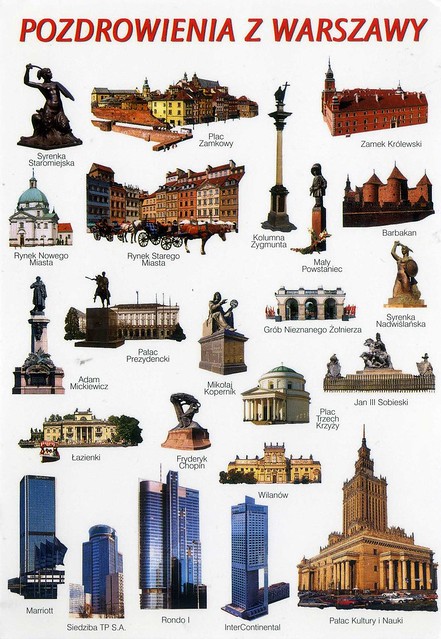
Warsaw, Poland

And now, a slightly different postcard from Warsaw, Poland...


The title on the card translates as "Greetings from Warsaw". This card shows monuments and buildings all over the city. Most of them are in Old Town and near it. Mermaid is a symbol of the city. The legend says she promised to protect the city, which is why she has a sword and shield.


The stamp is from 2001, representing Farms.

Cape Naturaliste Lighthouse, Dunsborough, Western Australia

Another gorgeous viewcard, this time from Australia, sent by the lovely Heather.


Three views from Cape Naturaliste: Sugarloaf Rock (left), Cape Naturaliste Lighthouse, height 20 metres, elevation 123 metres above sea level (middle), and sunset viewed from walk trails at Cape Naturaliste (right), Leeuwin Naturaliste National Park.

Cape Naturaliste is a headland in the south western region of Western Australia at the western edge of the Geographe Bay. It is the northernmost point of the Leeuwin-Naturaliste Ridge which was named after the cape.

Cape Naturaliste is also the site of a lighthouse which was activated in 1904. It is a 20 m high cylindrical tower built of limestone that still uses its original first order Fresnel lens made by Chance Brothers. The lighthouse was constructed of limestone quarried from nearby Bunker Bay, which was also known as the "Quarries".


Great stamps, too! They are from a set of 4 stamps issued in 2010, showing Macquarie Island, a sub-antarctic island of the Australian Antarctic Territory. Listed as a World Heritage Area, the island plays host to a range of marine wildlife in spring and summer each year. There is also a permanently occupied station run by the Australian government.

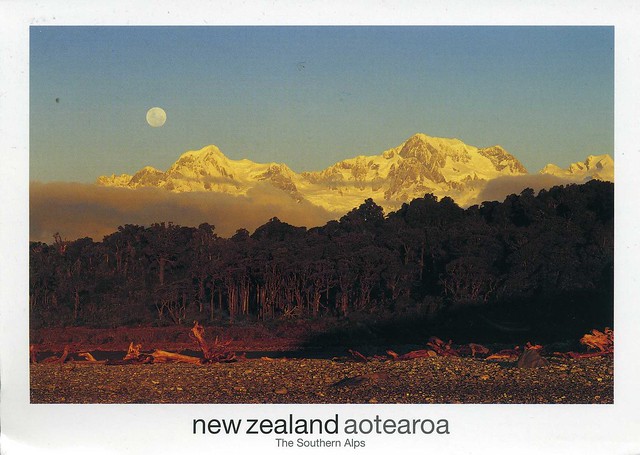
The Southern Alps, New Zealand

Another week gone by.. and it's been a pretty good week, too. I've been to aikido and am actually enjoying it, I hope it'll last...! I've also been working on my crazy rainbow-striped crochet bag and got addicted to Being Human again - I've been watching season 2 and love it, I'm really excited about the third season. :) Mmmmm, yes, and I have also received some very nice postcards. :) This one from New Zealand arrived a couple of weeks ago, and I really like it. Isn't it a gorgeous view? I love the light here, and the full moon in the sky.


Here you can see moonrise over Mt Tasman (left) and Aoraki/Mt Cook, the two highest peaks in the Southern Alps at 3498 metres and 3754 metres respectively, seen here above the rainforest south of Okarito on the West Coast.

The Southern Alps is a mountain range which runs along the western side of the South Island of New Zealand. It forms a natural dividing range along the entire length of the South Island. The term "Southern Alps" generally refers to the entire range, although separate names are given to many of the smaller ranges that form part of it.

The range is often known in New Zealand as the Main Divide, as it effectively separates the more heavily populated eastern side of the island from the west coast. Politically, the peaks of the Southern Alps form the boundary of the Canterbury and West Coast Regions.

Saturday, 22 January 2011

Dominican Republic

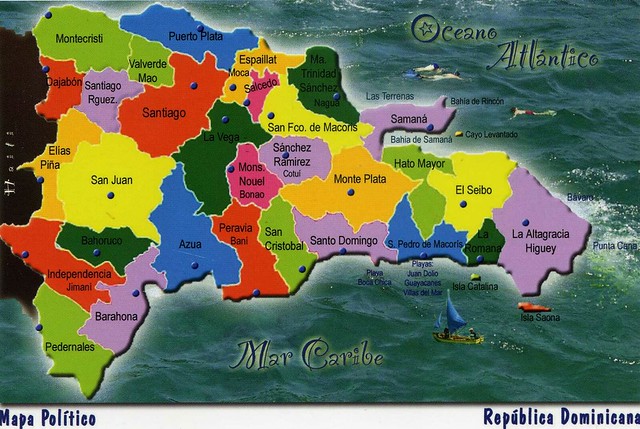
One more card for today, a map card of the Dominican Republic.


The Dominican Republic is divided into thirty–one provincias (provinces; singular provincia), while the national capital, Santo Domingo, is contained within its own Distrito Nacional ("National District"). The division of the country into provinces is laid down in the constitution and enacted by law. The latter is currently Law 5220 on the Territorial Division of the Dominican Republic, issued 1959 and frequently amended to create new provinces and lower–level administrative units.

The provinces are the first–level administrative subdivisions of the country. The headquarters of the central government's regional offices are normally found in the capital cities of provinces. The president appoints an administrative governor for each province but not for the Distrito Nacional. The provinces are divided into municipalities (municipios), which are the second–level political and administrative subdivisions of the country.


What makes this card so interesting is that it was actually mailed from Haiti! There's no actual stamp but you should be able to read the cancellation. It took this card almost three months to arrive, but to be honest, I'm surprised it arrived at all, considering all the problems and issues Haiti has been having (and still has). I do hope things will get better there soon.

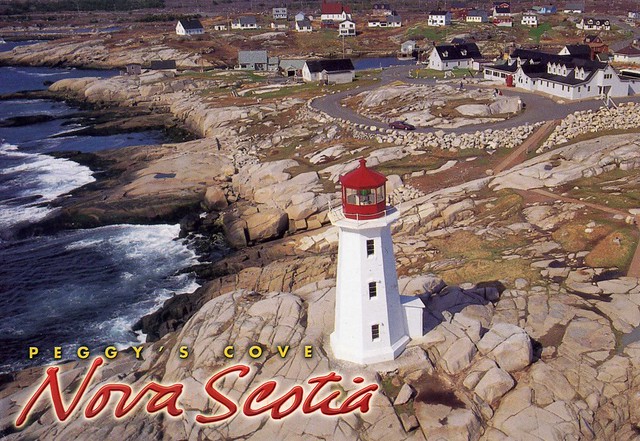
Peggy's Cove, Nova Scotia, Canada

This is one of the first official postcrossing cards I've received this year, and also one of my favourites. I always love receiving postcards from Canada (not sure why.. maybe because it's one of those countries that I think I would like living in?), AND this one also has a lighthouse on it. :)


CA-143070


Peggys Cove (2009 population: approx. 46), also known as Peggy's Cove from 1961 to 1976, is a small rural community located on the eastern shore of St. Margarets Bay in Nova Scotia's Halifax Regional Municipality. Peggy's Cove is 43 kilometres southwest of downtown Halifax and comprises one of the numerous small fishing communities located around the perimeter of the Chebucto Peninsula. The community is named after the cove of the same name, a name also shared with Peggys Point, immediately to the east of the cove. The village marks the eastern point of St. Margaret's Bay.

Peggy's Cove is one of the busiest tourist attractions in Nova Scotia and is a prime attraction on the Lighthouse Trail scenic drive. The community's famous lighthouse marks the eastern entrance of St. Margarets Bay and is officially known as the Peggys Point Lighthouse. Peggy's Cove has a classic red-and-white lighthouse still operated by the Canadian Coast Guard. The light station is situated on an extensive granite outcrop at Peggys Point, immediately south of the village and its cove.


SUCH nice stamps, too! The small one on the left is from a set of 5 stamps from last year, showing Historic Watermills in Canada. The other two stamps were issued earlier this month to commemorate the Year of the Rabbit.

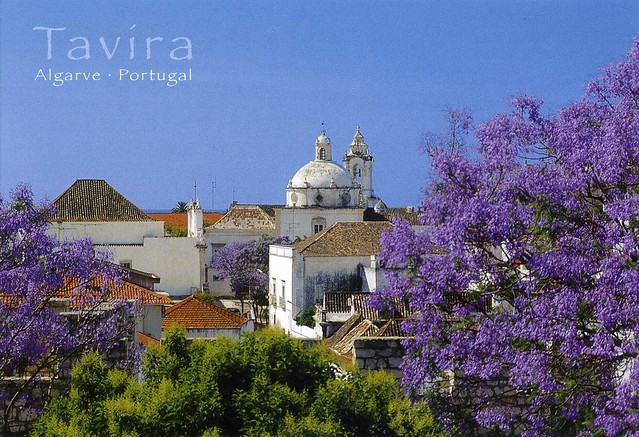
Tavira, Portugal

I've done a few quite big postcard swaps with Miceu in Portugal before and did one again not long ago. This card is from this latest swap.


I have a soft spot for Algarve as that was the first place abroad I've been to. I think I was about six or seven years old when my grandma took me there. Ahh, sun and ice cream.. I also remember spending a lot of time in the hotel's swimming pool, visiting a water park where I didn't feel so good, and a trip to 'Land's End' with some other people, and for some reason I still remember eating jelly babies on my way there. O_o I do wonder sometimes how my brain works... :P

I don't think I ever went to Tavira... It is a small town in Tavira Municipality, Algarve, with ca. 10 607 inhabitants. I love the colours on this card - the blue sky, white and red/brown buildings and the purple, blossoming trees. So pretty!


The stamps on the envelope are from a set of 4 stamps issued in 2008 under the theme 'International Year of Planet Earth'.

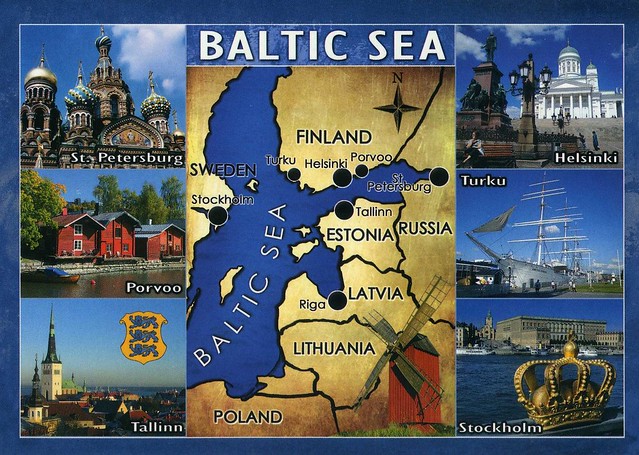
Baltic Sea

A slightly different map card I received in a swap from Finland...


The Baltic Sea is a brackish mediterranean sea located in Northern Europe. It is bounded by the Scandinavian Peninsula, the mainland of Europe, and the Danish islands. It drains into the Kattegat by way of the Øresund, the Great Belt and the Little Belt. The Kattegat continues through Skagerrak into the North Sea and the Atlantic Ocean. The Baltic Sea is connected by man-made waterways to the White Sea via the White Sea Canal, and to the North Sea via the Kiel Canal. The Baltic Sea might be considered to be bordered on its northern edge by the Gulf of Bothnia, on its northeastern edge by the Gulf of Finland, and on its eastern edge by the Gulf of Riga. However, these various gulfs can be considered to be simply offshoots of the Baltic Sea, and therefore parts of it.


The small stamps are from a set of 6 definitives issued in 2008, with the theme 'water & landscape views'. The bigger stamp is from 2008 as well and shows a snowflake. The stamp is actually transparent, although you can't really see that here.

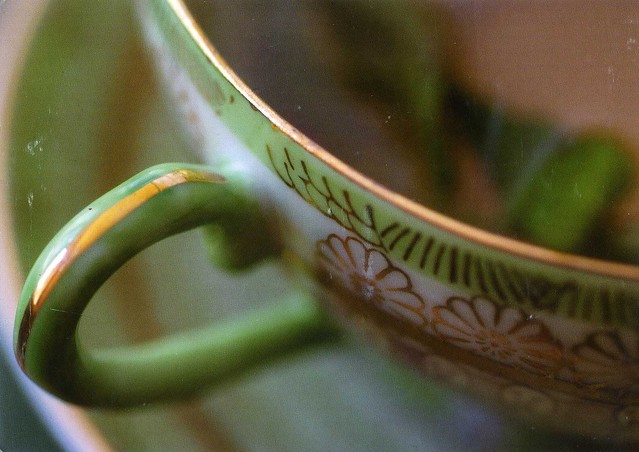
tea pause

I must have already mentioned that I love tea, so it's probably quite obvious that I collect tea-related postcards. This card had been in my favourites for a while, and I recently received it as a complete surprise from a very nice postcrosser, Liisa, in Finland. Thank you so much, this is a real treat (also because of the stamps, but more about those later)!


I've been drinking even more tea lately as I've been working on that big translation assignment, and I don't seem to be able to translate without tea. :P I tend to have stronger black teas in the morning and earlier on in the day, and when it gets later I often switch to green or white tea. It's probably more a mental thing but I do need black tea in the mornings, I just don't consider myself as having properly waken up without it. ...and even when I don't have many breaks during translating, at least I have to take short breaks to make myself more tea. :)


...and here is why this card is even more special - it was mailed from Åland! I honestly have no idea how Liisa does this or how she got me a special Christmas cancellation so many days AFTER Christmas, but I'm very impressed. And she used the Inge Löök Christmas stamp!! The stamp next to it is from a set of 3 stamps issued in 2004, depicting animals. This one here is the Stoat. The stamp underneath is from a set of 2 stamps issued in 2002, representing Batrachians and Reptiles. This one shows the Smooth snake.

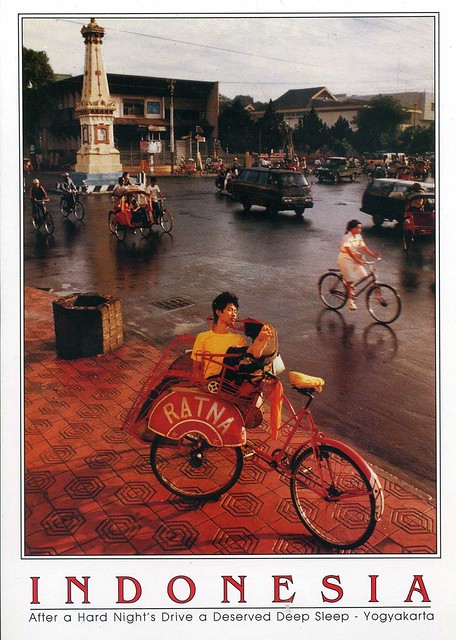
Yogyakarta, Indonesia

I don't normally have any luck in lotteries and such, which is also why I never buy scratch cards - what's the point when I'm not going to win anything? :P ..sooo, I was really surprised when I recently won a lot of goodies in a lottery on the postcrossing forum. ..and it was hosted by Shinta, a wonderful Indonesian postcrosser. :) To celebrate, I started my own lottery today. It's here if you want to join. :) Well, that lottery is also to celebrate the fact that I finally finished my big translation assignment yesterday. Or I hope I did, if the client doesn't want any extra work done and is happy with what I've done...


This is one of the many postcards Shinta sent me. This is one of my favourites - I love seeing street views and ordinary life on postcards (wish I could find such cards here, too...).

Yogyakarta is renowned as a centre of classical Javanese fine art and culture such as batik, ballet, drama, music, poetry, and puppet shows. It is also famous as a centre for Indonesian higher education and the seat of Gadjah Mada University, one of the three most prestigious universities in Indonesia. Yogyakarta was the Indonesian capital during the Indonesian National Revolution from 1945 to 1949. It has a population of roughly 388,000.


...and here's another card from Shinta, showing a typical Indonesian market where you can (=must) bargain over the price, and have a chit-chat with the seller. :)


There were so many pretty, colourful stamps on the envelope! The one on top left is from a set of 6 stamps issued in 2010, showing Indonesian Cultural Heritage. The one next to it is from a set of 2 stamps from 2009, a joint issue with Iran. The stamp on the right is from a set of 7 stamps issued in 2008, with the theme "Road to Jakarta". The bird stamp was issued in 2008 and comes from a set of 11 (or 12?) stamps depicting Indonesian flora and fauna. The stamp at the bottom is from a set of 3 stamps issued in 2009 to commemorate the Year of the Ox.

Thursday, 20 January 2011

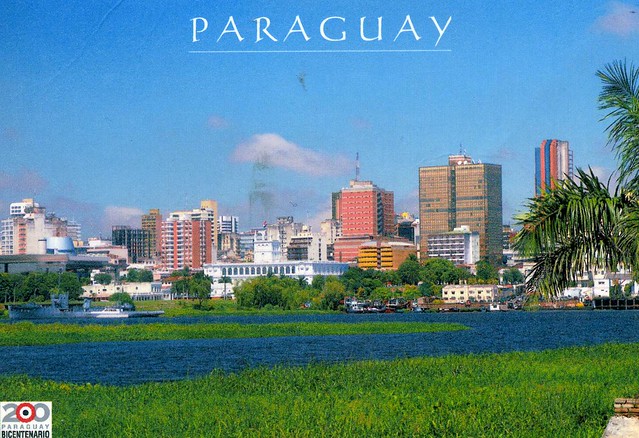
Asunción, Paraguay

One more card for today... and it's a new country to me! It was all quite spontaneous, too; Ana in Paraguya sent me a message asking if I'd like to swap with her, and of course I said yes. :) ..so now I have not one, but two written and stamped postcards from Paraguyay! I hope mine will reach her soon, too.


This is a view of the capital city of Paraguay, Asunción, and the Paraguay river, which is the one that gives the name to the country. The river divides the country into two regions, the eastern and western region. The city of Asunción is one of the oldest in South America, it was founded on August 15, 1537 by Spanish conquerors. In 2007 and 2008 the city of Asunción was found to be the world's least expensive city.

Population is approximately 520,000 people in the city proper. Roughly 30% of Paraguay's 6 million people live within Greater Asunción. Sixty-five percent of the total population in the city are under the age of 30. The population of Asunción has increased greatly during the last few decades as a consequence of internal migration from other Departments of Paraguay, at first because of the economic boom in the 1970s, and later because of economic recession in the countryside. The adjacent cities in the Gran Asunción area, such as Luque, Lambaré, San Lorenzo, Fernando de la Mora and Mariano Roque Alonso, have absorbed most of this influx due to the low cost of the land and easy access to Asunción.


The stamp is a Christmas stamp from 2010.