Showing posts with label japan. Show all posts

Saturday, 26 March 2016

Fukuoka, Japan

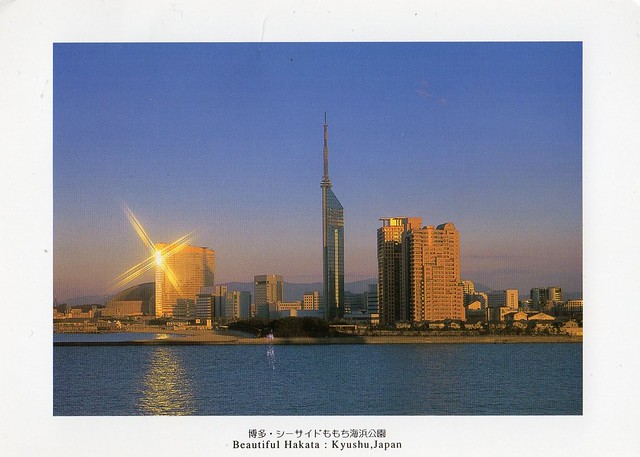
This is one of those cards again where I'm having slight problems with trying to identify the exact place on the card. ...or the text on the card just confuses me.. :P It says 'Hakata' on the front, but really it's Fukuoka (Hakata is a ward in Fukuoka). Anyway... This card was sent by Susanna, who was staying in Fukuoka as an exchange student last year and earlier this year (I *think* she's back in Finland now??).


Hakata-ku is a ward of the city of Fukuoka in Fukuoka Prefecture, Japan. Many of Fukuoka Prefecture and Fukuoka City's principal government, commercial, retail and entertainment establishments are located in the district. Hakata-ku is also the location of Fukuoka's main train station, Hakata Station, Fukuoka Airport and the Hakata Port international passenger ship terminal.

This card shows Fukuoka Tower among other things. Fukuoka Tower is a 234-metre tall tower located in the Momochihama area of Fukuoka, Japan. It is the tallest seaside tower in Japan. Fukuoka Tower was finished in 1989, taking a total of 14 months to build at a cost of ¥6,000,000,000 (roughly US $50,000,000 in 2015 terms). It was designed by Nikken Sekkei. Fukuoka Tower has three observation decks: one at 116 m, a café/lounge deck at 120 m, and the highest at 123 metres above the ground. The tower also has a triangular cross-section which is covered with 8000 half-mirrors. Because of this, it has been given the nickname "Mirror Sail".

Fukuoka is the capital city of Fukuoka Prefecture and is situated on the northern shore of the island of Kyushu in Japan. It is the most populous city on the island, followed by Kitakyushu. It is the largest city and metropolitan area west of Keihanshin. The city was designated on April 1, 1972, by government ordinance. Greater Fukuoka, with 2.5 million people (2005 census), is part of the heavily industrialized Fukuoka–Kitakyushu zone as well as Northern Kyushu.

As of July 2011, Fukuoka is Japan's sixth largest city, having passed the population of Kyoto. Since the founding of Kyoto in 794, this marks the first time that a city west of the Kinki region has a larger population than Kyoto. In ancient times, however, the area near Fukuoka, the Chikushi region, was thought by some historians to have possibly been even more influential than the Yamato region.

Tuesday, 19 January 2016

Sites of Japan’s Meiji Industrial Revolution: Iron and Steel, Shipbuilding and Coal Mining

Another smaller post for today. I was supposed to do a proper one but I got distracted earlier. :P Anyway, I'll start with this Unesco card I received from dear Sayaka last year.


Sites of Japan’s Meiji Industrial Revolution: Iron and Steel, Shipbuilding and Coal Mining

The site encompasses a series of twenty three component parts, mainly located in the southwest of Japan. It bears testimony to the rapid industrialization of the country from the middle of the 19th century to the early 20th century, through the development of the iron and steel industry, shipbuilding and coal mining. The site illustrates the process by which feudal Japan sought technology transfer from Europe and America from the middle of the 19th century and how this technology was adapted to the country’s needs and social traditions. The site testifies to what is considered to be the first successful transfer of Western industrialization to a non-Western nation.
Tuesday, 5 January 2016

Happy New Year 2016!

Happy New Year 2016! I think it's about time for an update.. :P I don't even have a proper excuse for not updating sooner. It's been the usual - either I've been too busy or I just haven't been in the mood. The last few months of 2015 were pretty eventful, though, at least by my standards. It included a holiday to Gran Canaria, a trip to Finland, a Christmas job with Royal Mail and another trip to Finland - Matt and I went over for Christmas as we wanted to surprise my mum on her 60th birthday. The plan worked, too. :)

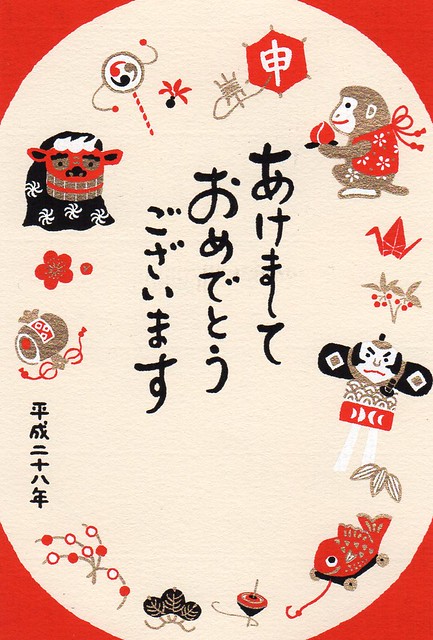
Anyway, 2016 is Year of the Monkey so here is a new year's card to celebrate the new year.


I do love Japanese New Year's cards. There seems to be so much variety, too. I have no idea where to get these in England, I haven't seen any anywhere near where I live.

Wednesday, 16 September 2015

Kinkaku-ji, Kyoto, Japan

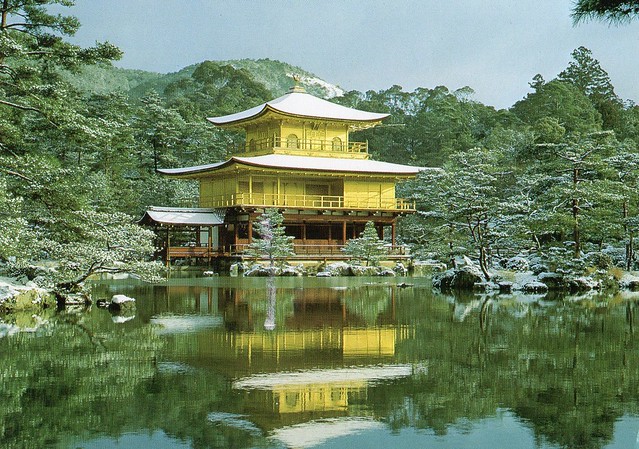
I already had postcards of Kinkaku-ji, and while it's still a very beautiful postcard, I have to confess I was more excited to receive one of these Moomin stamps. :P


Kinkaku-ji (lit. "Temple of the Golden Pavilion"), officially named Rokuon-ji, is a Zen Buddhist temple in Kyoto, Japan. It is one of the most popular buildings in Japan, attracting a large number of visitors annually. It is designated as a National Special Historic Site and a National Special Landscape, and it is one of 17 locations comprising the Historic Monuments of Ancient Kyoto World Heritage Site.

Wednesday, 9 September 2015

Hiroshima Electric Railway, Japan

A lovely, lovely card I received through the 'Japan - rest of the world' tag on the Postcrossing forum earlier this year. I love trams (and miss the ones in Helsinki. The local one here is too expensive for me :() and it's fascinating to see the changes throughout the years. I also have a bit of a soft spot for Hiroshima as I used to have a pen friend there years ago. I haven't heard from him for ages now, though, which is a real shame.


Hiroshima Electric Railway Co., Ltd. is a Japanese transportation company established on June 18, 1910, that operates streetcars and buses in and around Hiroshima Prefecture. It is known as "Hiroden" for short.

The company's rolling stock includes an eclectic range of trams manufactured from across Japan and Europe, earning it the nickname "The Moving Streetcar Museum".

Monday, 6 July 2015

Hama Rikyu Gardens, Tokyo, Japan

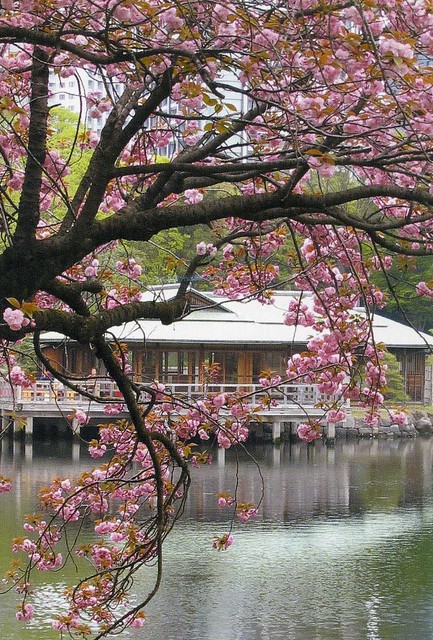
A beautiful postcard from Japan from earlier this year. I'd love to get to see the cherry blossoms in Japan one day and experience 'hanami', it looks pretty amazing!


Hama Rikyu Gardens is a public park in Chūō, Tokyo, Japan. Located at the mouth of the Sumida River, it was opened April 1, 1946. The park is a 250,165 m² landscaped garden surrounding Shioiri Pond, the park itself surrounded by a seawater moat filled by Tokyo Bay. It was remodeled as a public garden park on the site of a villa of the Shogun Tokugawa family in the 17th century.


Japanese stamps are SO beautiful, and I love these special cancellations with pictures. I wish you could get nice cancellations in the UK as well... :/

Monday, 1 June 2015

Iwate, Japan

Ooops. I've been neglecting this blog again, which certainly wasn't my intention this time. I blame my terrible procrastination tendencies as I don't have any proper excuses for not updating. I'm rubbish at time management :/ ...and May just disappeared somewhere, which is a little scary. My pile of postcards for this blog has grown again - I did have it to a more manageable level at one point.. *sigh*

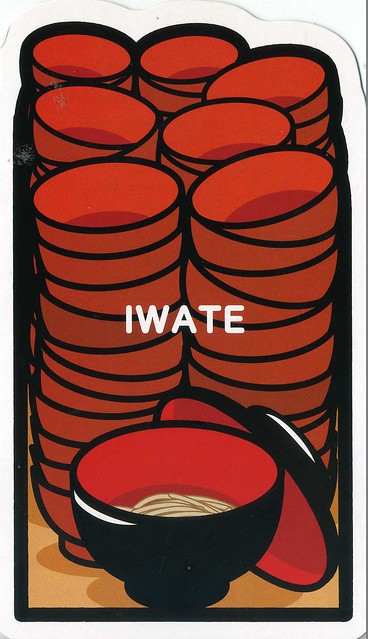
Today's first card is from a swap with Sayaka in Japan earlier this year, an addition to my still tiny Gotochi collection.

This card shows 'wanko-soba', an Iwate special. Sayaka tells me it's a very small amount of soba each, but the serving lady is always beside you and once she sees you finished one, she tries to serve one cup of soba more. ...repeat, repeat and repeat, and it's really quick, so it is also hard to act "I'm full". If you want to finish, you have to cover the cup but it's really difficult because the serving lady is really really quick. Sounds interesting... I do like soba, but have never had them this way.

Saturday, 9 May 2015

Historic Villages of Shirakawa-go and Gokayama

A lovely Unesco card from Japan. ...and with a Year of the Sheep stamp and a special cancellation! :)

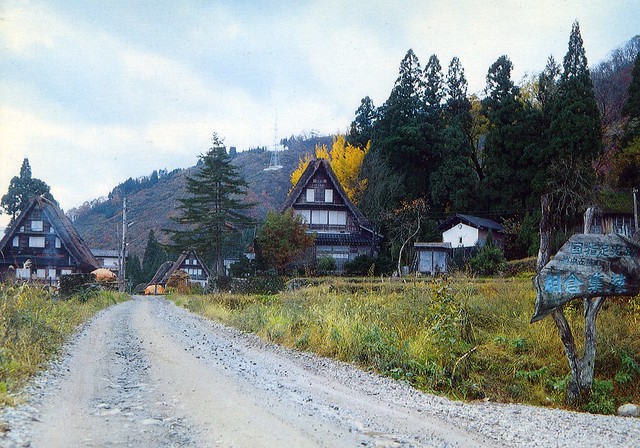
This is Ainokura Village, one of the Historic Villages of Shirakawa-go and Gokayama in Japan. Located in a mountainous region that was cut off from the rest of the world for a long period of time, these villages with their Gassho-style houses subsisted on the cultivation of mulberry trees and the rearing of silkworms. The large houses with their steeply pitched thatched roofs are the only examples of their kind in Japan. Despite economic upheavals, the villages of Ogimachi, Ainokura and Suganuma are outstanding examples of a traditional way of life perfectly adapted to the environment and people's social and economic circumstances.

Sunday, 19 April 2015

Dayan the Cat, Japan

A rare non-viewcard for this blog... I really like these Dayan the Cat illustrations, though, so I just *had* to post this here.

This postcard is from Michelle in Japan. I swapped 'Greetings from' postcards with her and received the Japan version from her, but mine was taking ages to arrive and it seemed like it had got lost so I sent her another one. ...and then the first one arrived pretty much straight after I had posted the second card, so Michelle sent me this as a thank you.

Michelle also asked me about my Sunday morning traditions. I don't really have any... I normally sleep late if I can, but once a month I try to go to an Aikido class in Birmingham.


Dayan the Cat is a character designed by Akiko Ikeda. There are quite a few books in the series, I think. I first came across this cat a few years ago when a Japanese penpal of mine sent me a Dayan the Cat book. It's in Japanese, though, and even though it's a children's book so supposedly the text is fairly simple, I don't understand too much of it. I did study the basics of Japanese in university, but it's been years and I haven't used the language since then so have forgotten most of it. I do think these illustrations are absolutely adorable, though. I've been lucky enough to receive a few postcards with Dayan. :)

Monday, 13 April 2015

Midori waterfall, Japan

A lovely waterfall postcard I received from Japan earlier this year. I really like the stamp and the special cancellation, too.


The text on the back of the postcard says this is Midori waterfall. The rest of the text is in Japanese and unfortunately I only know some very, very basic Japanese so I can't read the text and thus have no idea what it says. Trying to find info online was a bit tricky, too, but I did find this website, which had the following information:  

In order to restore Renchi-tei Garden, which was destroyed by the great fire of the Horeki period, the 11th lord Harunaga created this waterfall in 1774, at the same time as he built Yugao-tei Teahouse. 

From the "Harunaga Diary", we know that he was very demanding of the gardeners, asking them to redo their work several times. The result was a grand waterfall measuring 6.6 m. in height and 1.6 m. in width, which had a lot of water and produced a loud sound. The water crashes down onto the rocks below, and flows into Hisago-ike Pond. 

It was designed for visitors to enjoy not only its appearance, but also its sound. The trees around the waterfall that produce beautiful red autumn leaves are various types of Japanese maple that were especially selected for their subtly different shades of red. 
 

Wednesday, 8 April 2015

Tochigi, Japan

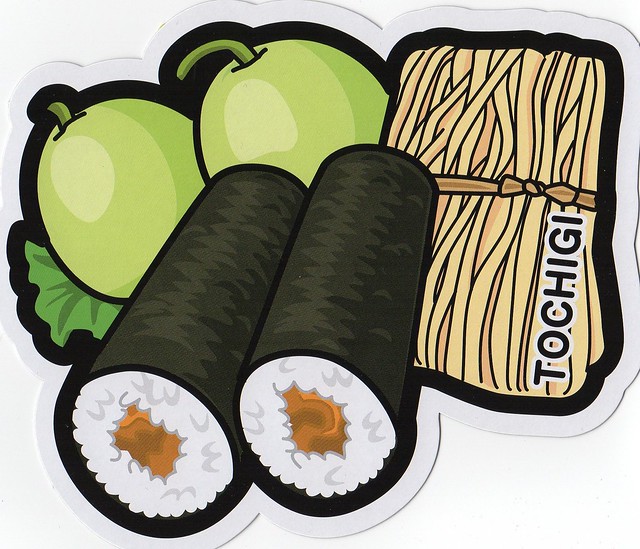
I really like the Japanese 'Gotochi' postcards but don't actively collect them - this would be way too difficult as most people will only swap the cards for other cards from the same series, or for other cards that are really hard to get and/or expensive. I was lucky enough to swap for two with Sayaka earlier this year, though. This one is making me hungry! :D


Kampyō, are dried shavings of calabash, a type of gourd. Kanpyō is an ingredient in traditional Edo style Japanese cuisine, and cooked and flavored kanpyō is commonly used in Futomaki sushi roll. Kanpyo was originally grown in the Osaka region, but now is a specialty product of Tochigi Prefecture. The gourd is harvested between late July and September. The white flesh of the gourd is cut into strips 3 cm wide and 3 mm thick, then either dried in the sun or dehydrated.

Sayaka also attached a photo she had taken of sushi rolls she had made using kampyo. Mmmm...! I'm not sure if I've ever tried it but it does look delicious. I'm quite fond of sushi but hardly ever get to eat it as there are no decent sushi places around where I live, and they are always really expensive anyway.

Tochigi Prefecture is a prefecture located in the Kantō region on the island of Honshu, Japan. The capital is the city of Utsunomiya. Nikkō, whose ancient Shintō shrines and Buddhist temples UNESCO has recognized by naming them a World Heritage Site, is in this prefecture. Nikkō is approximately one hour by train from Tokyo, and approximately 35 km west of the capital Utsunomiya. Other famous parts of Tochigi include a region called Nasu known for onsen and local sake and ski resorts. The Imperial family has a villa in Nasu. Nasu-Shiobara is a major Shinkansen station.

Sunday, 22 March 2015

Sacred Sites and Pilgrimage Routes in the Kii Mountain Range, Japan

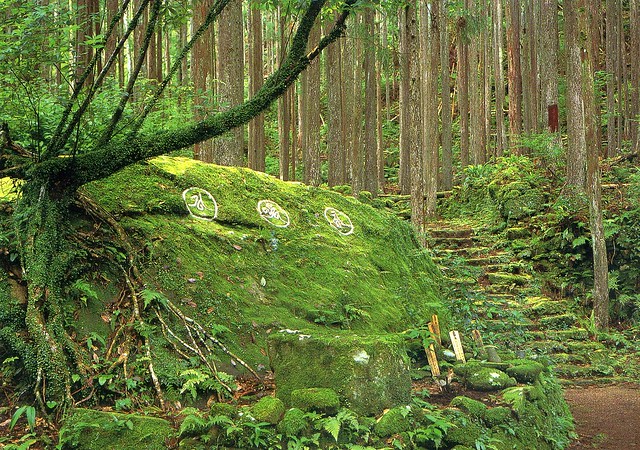
A lovely Unesco card from Japan I received some time ago. This place looks absolutely gorgeous!


Set in the dense forests of the Kii Mountains on a peninsula in the southernmost part of mainland Japan, overlooking the Pacific Ocean, three sacred sites – Yoshino and Omine, Kumano Sanzan, and Koyasan – are linked by pilgrimage routes to the ancient capital cities of Nara and Kyoto. Together these sites, the connecting pilgrimage routes, and surrounding forests form a cultural landscape that reflect the fusion of Shintoism, rooted in the ancient tradition of nature worship in Japan, and Buddhism, which was introduced from China and the Korean Peninsula. The sacred sites are connected by 307 km of pilgrimage routes which cover a total area of 495.3 ha. With the surrounding forest landscape, they reflect a persistent and extraordinarily well-documented tradition of sacred mountains maintained over 1,200 years.

Sunday, 15 March 2015

Moomins from Japan

I don't normally post non-view cards here, not really sure why as I do like a lot of topics. One of them is Moomins, so I was really happy when Fumie of Japan was offering special Moomin postcards from two Tove Jansson exhibitions in Japan recently. She kindly offered to swap for two postcards, here is the first one. I wish I could've gone to one of these exhibitions, too... There was one in Helsinki, Finland last (?) year, too, but sadly I missed that one.


Fumie told me that one of the exhibitions had many of Tove Jansson's artworks from her early years (before she created the Moomins) on display. I've seen some of them before and really like those as well.

Saturday, 28 February 2015

Greetings from Japan

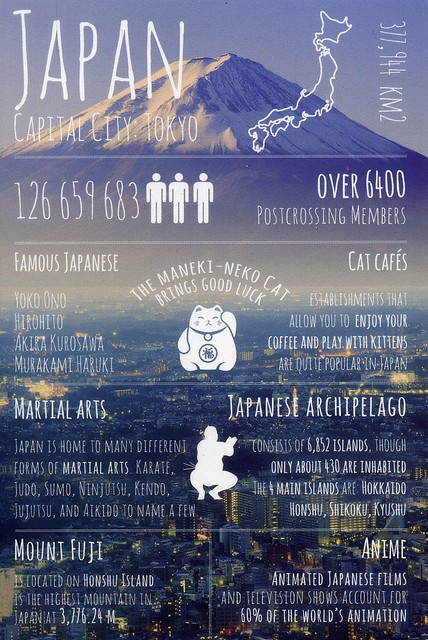
Today's 'Greetings from' postcard comes from Japan. This was a bit of an awkward swap, too - I sent the 'Greetings from'  United Kingdom postcard in return to Michelle, but it was taking ages to arrive so we both assumed it had got lost and I sent another one in the hopes that that one would arrive. ...and a few days after posting the second card, the first one arrived! Well, I did receive a gorgeous Dayan the Cat postcard from Michelle as well so I'm not really complaining too much...!


This is one of my favourite postcards in this series. I love the colours and the little maneki-neko illustration, and it also helps that the postcard mentions Haruki Murakami, quite possibly my favourite author, and Aikido, a martial art I've been practicing since 2005 and am currently a 2nd dan black belt in. ...and I have a soft spot for Japan in general and would very much love to visit the country one day. I only just realised as well that Mount Fuji is a Unesco site, so this is another card for that collection of mine. :)

The beauty of the solitary, often snow-capped, stratovolcano, known around the world as Mount Fuji, rising above villages and tree-fringed sea and lakes has long been the object of pilgrimages and inspired artists and poets. The inscribed property consists of 25 sites which reflect the essence of Fujisan’s sacred and artistic landscape. In the 12th century, Fujisan became the centre of training for ascetic Buddhism, which included Shinto elements. On the upper 1,500-metre tier of the 3,776m mountain, pilgrim routes and crater shrines have been inscribed alongside sites around the base of the mountain including Sengen-jinja shrines, Oshi lodging houses, and natural volcanic features such as lava tree moulds, lakes, springs and waterfalls, which are revered as sacred. Its representation in Japanese art goes back to the 11th century, but 19th century woodblock prints of views, including those from sand beaches with pine tree groves have made Fujisan an internationally recognized icon of Japan and have had a deep impact on the development of Western art.


A sushi stamp!! *heart*

Sunday, 17 August 2014

Niigata, Japan

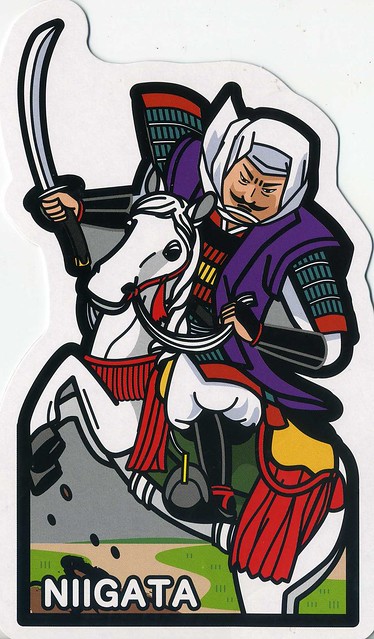
There has been a fair bit of discussion about 'Gotochi' postcards on the Postcrossing forum and I don't really have anything to add. I do really like this series, it's a shame the postcards are so expensive and hard to get, though. I've managed to get a few, this one is probably my favourite as I find samurai pretty fascinating.


This postcard is from Niigata Prefecture, a prefecture of Japan located on the island of Honshū on the coast of the Sea of Japan. The capital is the city of Niigata with which it shares the same name. The name "Niigata" literally means "new lagoon".

Until after the Meiji Restoration, the area that is now Niigata Prefecture was divided into Echigo Province and Sado Province. During the Sengoku period, the Nagao clan, who were at times vassals to the Uesugi, ruled a fief in the western part of modern Niigata from Kasugayama Castle. The most notable member of the Nagao clan was Nagao Kagetora, later and better known as Uesugi Kenshin. He unified the leaders of Echigo Province and became its sole ruler. By taking the surname Uesugi, he also became the head of the Uesugi clan and effectively brought their realm under his control.

Saturday, 11 January 2014

Sapporo Snow Festival, Japan

Another snowy view, this time from Japan.


The Sapporo Snow Festival is a festival held annually in Sapporo, Japan, over seven days in February. Odori Park, Susukino, and Tsudome are the main sites of the festival. The 2014 Snow Festival dates are 5 to 11 February.

The festival is one of Japan's largest and most distinctive winter events. In 2007 (58th Festival), about two million people visited Sapporo to see the hundreds of snow statues and ice sculptures at the Odori Park and Susukino sites, in central Sapporo, and at the Satoland site. An International Snow Sculpture Contest has been held at the Odori Park site since 1974, and 14 teams from various regions of the world participated in 2008. The subject of the statues varies and often features an event, famous building or person from the previous year.

The Snow Festival began in 1950, when six local high school students built six snow statues in Odori Park. In 1955, the Japan Self-Defense Forces from the nearby Makomanai base joined in and built the first massive snow sculptures, for which the Snow Festival has now become famous. Several snow festivals existed in Sapporo prior to the Sapporo Snow Festival, however, all of these were suspended during World War II.

Sunday, 7 July 2013

Hakone Tozan Railway, Japan

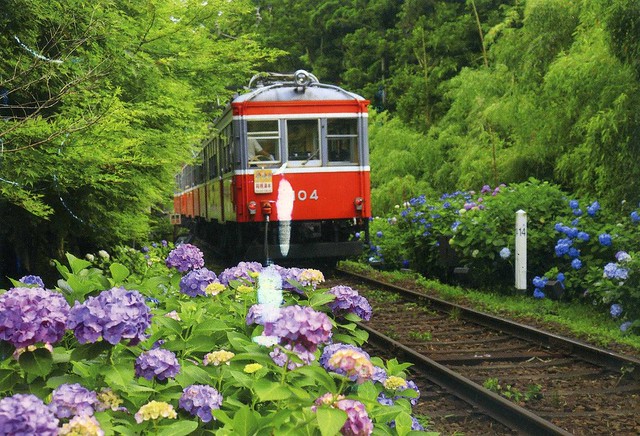
A gorgeous train postcard I received from the wonderful 'Choose a Country' RR last year. I really like the scenery here as well!


The Hakone Tozan Railway is a private railway company in Japan, part of the Odakyu Group. It is best known for its operation of the Hakone Tozan Line, the first mountain railway in Japan, but like most Japanese railway companies, also operates bus service, namely Hakone Tozan Bus. It also operates the connecting Hakone Tozan Cable Car.

The Hakone Tozan Line consists of two sections: a lower section from Odawara to Hakone-Yumoto, and an upper section from Hakone-Yumoto to Gōra. At Gōra, a cable car is available to transfer visitors to and from Lake Ashi.

Thursday, 6 September 2012

Nagasaki, Japan

A wonderful view from Nagasaki, Japan! Nagasaki reminds me of the 'Young Samurai' books by Chris Bradford - the main character was trying to reach Nagasaki to get back to England from Japan. The series has now finished but I don't want to spoil it here :P I did really enjoy the last book in the series, even if the whole series is quite cheesy and definitely aimed at readers younger than me. :p


On this postcard you can see Old Glover's Residence in Nagasaki. Nagasaki is the capital and the largest city of Nagasaki Prefecture on the island of Kyushu in Japan. Nagasaki was founded by the Portuguese in the second half of the 16th century on the site of a small fishing village, formerly part of Nishisonogi District. It became a center of Portuguese and other European peoples' influence in the 16th through 19th centuries, and the Churches and Christian Sites in Nagasaki have been proposed for inscription on the UNESCO World Heritage List. Part of Nagasaki was home to a major Imperial Japanese Navy base during the First Sino-Japanese War and Russo-Japanese War. Its name means "long cape".

During World War II, the atomic bombings of Hiroshima and Nagasaki made Nagasaki the second and, to date, last city in the world to experience a nuclear attack.

Thursday, 14 June 2012

Daishō-in, Mount Misen, Miyajima, Japan

When I started Postcrossing I used to receive quite a lot of postcards from Japan. I don't get them that often anymore and it's always a real treat to receive one, such as this beautiful shrine from Miyajima.


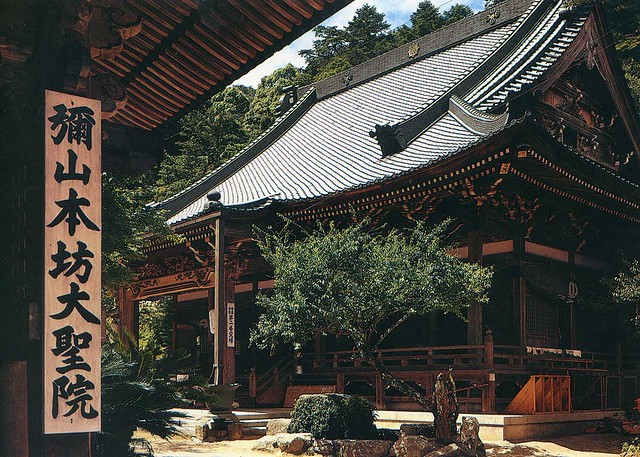
On this postcard you can see Daishō-in, the main shrine of Mount Misen. Mount Misen is a holy mountain on the holy island Itsukushima in Hatsukaichi, Hiroshima. It is situated within the World Heritage area of Itsukushima Shrine.

The sea around the island (Seto Inland Sea) and all of the island are within Setonaikai National Park. The foothills of the north side of the mountain are covered by primeval forest and have many buildings and gates, including the temple of  Daishō-in.


Such a beautiful lighthouse stamp, and a lovely special cancellation! There's actually another special cancellation (in the shape of a maple leaf) on the card as well but it's on top of the writing so I didn't want to scan it.

Wednesday, 9 May 2012

Himeji Castle, Japan

Uh-oh... It's been a while since my last post here, hadn't realised it was quite this long. Days just seem to have disappeared somewhere. ...and the new update page on blogger is really confusing, it could take me a while to get used to this... :S This postcard is from my penpal Asuka in Japan. She actually sent this to me last October and I only just realised I haven't written to her for a while. I'm such a crappy penpal sometimes :S I sent her a postcard, I hope she'll still want to stay in touch. Anyway, she moved to Himeji last year. Himeji Castle is probably the most famous sight there. I love this slighly more unusual view of it.


Himeji Castle is a hilltop Japanese castle complex located in Himeji, in the Hyōgo Prefecture. The castle is regarded as the finest surviving example of prototypical Japanese castle architecture, comprising a network of 83 buildings with advanced defensive systems from the feudal period. The castle is frequently known as Hakuro-jō ("White Egret Castle") or Shirasagi-jō ("White Heron Castle") because of its brilliant white exterior and supposed resemblance to a bird taking flight.

Himeji Castle dates to 1333, when Akamatsu Norimura built a fort on top of Himeyama hill. The fort was dismantled and rebuilt as Himeyama Castle in 1346, and then remodeled into Himeji Castle two centuries later. Himeji Castle was then significantly remodeled in 1581 by Toyotomi Hideyoshi, who added a three-story castle keep. In 1600, Tokugawa Ieyasu awarded the castle to Ikeda Terumasa for his help in the Battle of Sekigahara, and Ikeda completely rebuilt the castle from 1601 to 1609, expanding it into a large castle complex. Several buildings were later added to the castle complex by Honda Tadamasa from 1617 to 1618. For over 400 years, Himeji Castle has remained intact, even throughout the extensive bombing of Himeji in World War II, and natural disasters such as the 1995 Great Hanshin earthquake.

Himeji Castle is the largest and most visited castle in Japan, and it was registered in 1993 as one of the first UNESCO World Heritage Sites in the country. The area within the middle moat of the castle complex is a designated Special Historic Site and five structures of the castle are also designated National Treasures. Along with Matsumoto Castle and Kumamoto Castle, Himeji Castle is considered one of Japan's three premier castles. In order to preserve the castle buildings, it is currently undergoing restoration work that is expected to continue for several years.