Today seems to be all about postcards I received in 2015. :P It really wasn't intentional, I always just tend to pick a few random cards from a pile I've put aside that I want to blog about. Anyway, this was quite a treat as well and I was really happy when Ave agreed to swap with me. It's not like I receive postcards from Cambodia every other week. :P
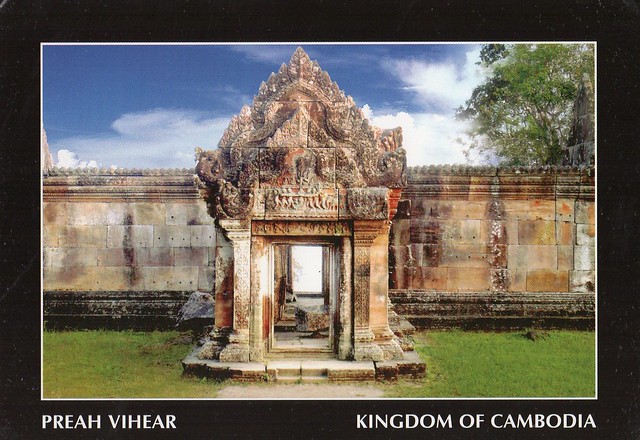
Situated on the edge of a plateau that dominates the plain of Cambodia, the Temple of Preah Vihear is dedicated to Shiva. The Temple is composed of a series of sanctuaries linked by a system of pavements and staircases over an 800 metre long axis and dates back to the first half of the 11th century AD. Nevertheless, its complex history can be traced to the 9th century, when the hermitage was founded. This site is particularly well preserved, mainly due to its remote location. The site is exceptional for the quality of its architecture, which is adapted to the natural environment and the religious function of the temple, as well as for the exceptional quality of its carved stone ornamentation.
Showing posts with label temples. Show all posts
Sunday, 13 March 2016
Wednesday, 16 September 2015
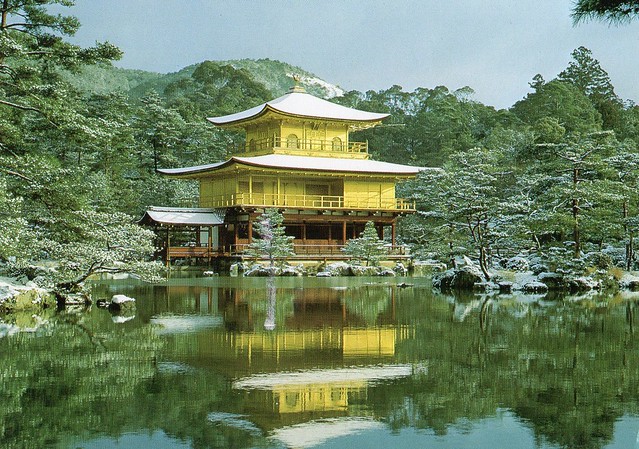
Kinkaku-ji, Kyoto, Japan
I already had postcards of Kinkaku-ji, and while it's still a very beautiful postcard, I have to confess I was more excited to receive one of these Moomin stamps. :P
Kinkaku-ji (lit. "Temple of the Golden Pavilion"), officially named Rokuon-ji, is a Zen Buddhist temple in Kyoto, Japan. It is one of the most popular buildings in Japan, attracting a large number of visitors annually. It is designated as a National Special Historic Site and a National Special Landscape, and it is one of 17 locations comprising the Historic Monuments of Ancient Kyoto World Heritage Site.
Saturday, 21 February 2015
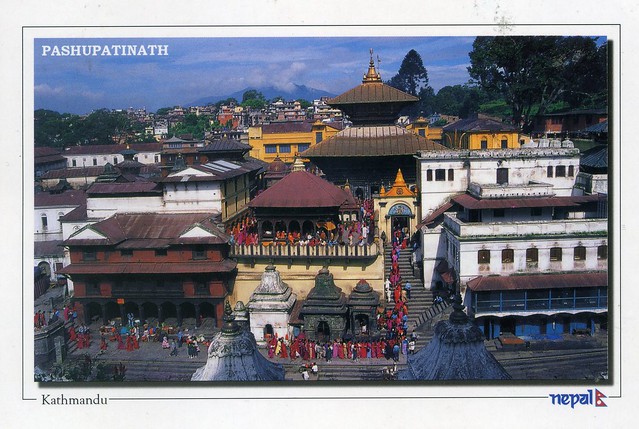
Pashupatinath Temple, Nepal
This is an interesting one. Chiayu of Taiwan messaged me last year, asking whether I'd be interested in swapping postcards as she was going to Nepal for a while. Of course I was interested! :) I was really surprised about her message, though - normally people want something a lot harder to get than what I can usually offer if they are offering postcards from somewhere like Nepal. Well, it certainly was a nice surprise!
The gold roofed Pashupatinath Temple is from the 5th century AD, dedicated to Lord Shiva and a Unesco world heritage site as well as one of the holiest shrines for Hindus. It is part of the cultural heritage of the Kathmandu Valley. The cultural heritage of the Kathmandu Valley is illustrated by seven groups of monuments and buildings which display the full range of historic and artistic achievements for which the Kathmandu Valley is world famous. The seven include the Durbar Squares of Hanuman Dhoka (Kathmandu), Patan and Bhaktapur, the Buddhist stupas of Swayambhu and Bauddhanath and the Hindu temples of Pashupati and Changu Narayan.
Chiayu used a matching stamp :)
Wednesday, 24 December 2014
Bulguksa Temple, South Korea
Merry Christmas to everyone who celebrates it! I hope you'll all have a wonderful holiday season. Personally I'm hoping to get some sleep... Last night I managed to sleep for maybe two hours in total as my body clock is still a bit messed up from all the night shifts I've been doing, so I'm a bit tired now.. -_-
Anyway, just one postcard for today. There's no snow here in England at the moment, thank goodness, but I thought this would be appropriate for today and sort of Christmassy.
Bulguksa is located on the slopes of mount Toham (Jinheon-dong, Gyeongju city, North Gyeongsang province, South Korea). It is a head temple of the Jogye Order of Korean Buddhism and encompasses seven National treasures of South Korea, including Dabotap and Seokgatap stone pagodas, Cheongun-gyo (Blue Cloud Bridge), and two gilt-bronze statues of Buddha. The temple is classified as Historic and Scenic Site No. 1 by the South Korean government. In 1995, Bulguksa was added to the UNESCO World Heritage List together with the Seokguram Grotto, which lies four kilometers to the east.
The temple is considered as a masterpiece of the golden age of Buddhist art in the Silla kingdom. It is currently the head temple of the 11th district of the Jogye Order of Korean Buddhism.
Sunday, 12 January 2014
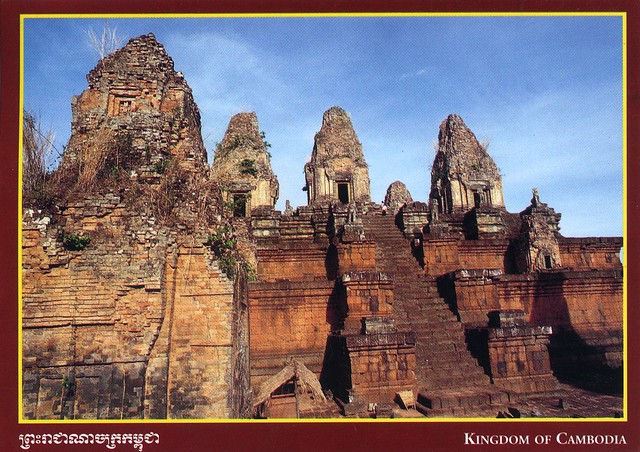
Brei Roub Temple, Cambodia
Another fairly old card, this is actually an official Postcrossing card! It's also one of my only postcards received from Cambodia so it's pretty special to me.
KH-186
Cambodia, officially known as the Kingdom of Cambodia and once known as the Khmer Empire, is a country located in the southern portion of the Indochina Peninsula in Southeast Asia. Its total landmass is 181,035 square kilometres, bordered by Thailand to the northwest, Laos to the northeast, Vietnam to the east, and the Gulf of Thailand to the southwest.
With a population of over 14.8 million, Cambodia is the 70th most populous country in the world. The official religion is Theravada Buddhism, which is practiced by approximately 95% of the Cambodian population. The country's minority groups include Vietnamese, Chinese, Chams, and 30 hill tribes. The capital and largest city is Phnom Penh, the political, economic, and cultural center of Cambodia. The kingdom is a constitutional monarchy with Norodom Sihamoni, a monarch chosen by the Royal Throne Council, as head of state. The head of government is Hun Sen, who is currently the longest serving non-royal leader in South East Asia and has ruled Cambodia for over 25 years.
Cambodia's ancient name is "Kambuja". In 802 AD, Jayavarman II declared himself king marking the beginning of the Khmer Empire which flourished for over 600 years allowing successive kings to dominate much of Southeast Asia and accumulate immense power and wealth. The Indianized kingdom built monumental temples including Angkor Wat, now a World Heritage Site, and facilitated the spread of first Hinduism, then Buddhism to much of Southeast Asia. After the fall of Angkor to Ayutthaya in the 15th century, Cambodia was ruled as a vassal between its neighbors until it became a protectorate by the French in the mid-19th century. Cambodia gained independence in 1953.
The Vietnam War extended into Cambodia, during which the Khmer Rouge took Phnom Penh in 1975 and later carried out the Cambodian Genocide from 1975-1979 when they were ousted by Vietnam and then fought against the Vietnamese backed People's Republic of Kampuchea in the Cambodian–Vietnamese War (1979-1991). Following the 1991 Paris Peace Accords Cambodia was governed briefly by a United Nations mission (1992-1993). The UN withdrew after holding elections in which around 90% of the registered voters cast ballots. The 1997 coup placed power solely in the hands of President Hun Sen and the Cambodian People's Party who remain in power as of 2013.
Cambodia has since had one of the best economic records in Asia, with economic growth averaging 6 percent for the last 10 years. Strong textiles, agriculture, construction, garments, and tourism sectors led to foreign investments and international trade. Oil and natural gas deposits found beneath Cambodia's territorial waters in 2005 remain mostly untapped, due in part to territorial disputes with Thailand.
This cancellation really confuses me - it clearly says 2008 but the card was actually mailed in 2009! Also, it looks like it says 'May' but the card was sent in April. Someone in the post office wasn't paying attention??
Saturday, 29 June 2013
Sunset over temples, Bagan, Myanmar
Today's last card is quite a treat - Myanmar is one of those countries I never thought I'd ever receive a written and stamped postcard from! ..and then I had two through a great swap last year! :O I might post the second card here at some point but for now, here's a pretty sunset view.
Bagan is an ancient city located in the Mandalay Region of Myanmar. From the 9th to 13th centuries, the city was the capital of the Kingdom of Pagan, the first kingdom to unify the regions that would later constitute modern Myanmar. During the kingdom's height between the 11th and 13th centuries, over 10,000 Buddhist temples, pagodas and monasteries were constructed in the Bagan plains alone, of which the remains of over 2200 temples and pagodas still survive to the present day.
Myanmar (Burma) is a sovereign state in Southeast Asia bordered by China, Thailand, India, Laos and Bangladesh. One-third of Myanmar's total perimeter of 1,930 kilometres forms an uninterrupted coastline along the Bay of Bengal and the Andaman Sea. Its population of over 60 million makes it the world's 24th most populous country and, at 676,578 km2, it is the world's 40th largest country and the second largest in Southeast Asia.
The country has been under military control since a coup d'état in 1962. During this time, the United Nations and several other organizations have reported consistent and systematic human rights violations in the country, including genocide, the use of child soldiers, systematic rape, child labour, slavery, human trafficking and a lack of freedom of speech. Since the military began relinquishing more of its control over the government, however – coupled with its release in 2011 of Myanmar's most prominent human rights activist, Aung San Suu Kyi – the country's foreign relationships have improved rapidly, especially with major powers such as the European Union, Japan, and the United States. Trade and other economic sanctions, for example, imposed by the European Union and the United States, have now been eased.
Myanmar is a country rich in precious stones, oil, natural gas and other mineral resources. In 2011, its GDP stood at US$82.7 billion and was estimated as growing at an annual rate of 5.5%.
Wednesday, 4 July 2012
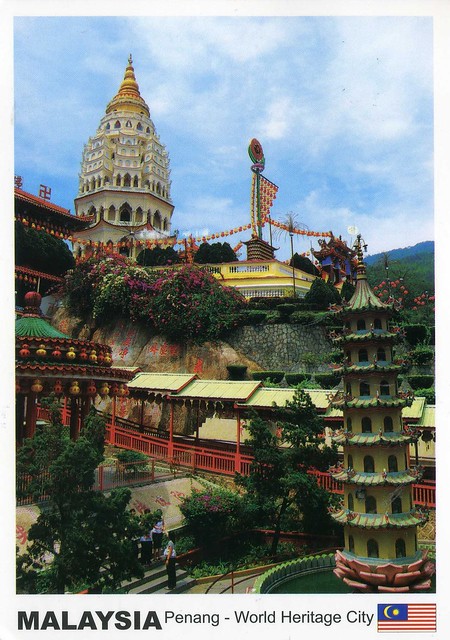
Penang, Malaysia
My selection of postcards for today is quite a random mix - now moving on to Asia, namely Malaysia. I received this postcard from a tag earlier this year and simply adore it, it's such a colourful card with lots of fascinating little details. ...and it's a Unesco site as well!
Penang is a state in Malaysia and the name of its constituent island, located on the northwest coast of Peninsular Malaysia by the Strait of Malacca. It is bordered by Kedah in the north and east, and Perak in the south. Penang is the second smallest Malaysian state in area after Perlis, and the eighth most populous. It is composed of two parts – Penang Island, where the seat of government is, and Seberang Perai (formerly, and occasionally Province Wellesley) on the Malay Peninsula. Highly urbanised and industrialised Penang is one of the most developed and economically important states in the country, as well as a thriving tourist destination. Its heterogeneous population is highly diverse in ethnicity, culture, language, and confessions. A resident of Penang is colloquially known as a Penangite.
On this postcard you can see the Kek Lok Si Temple, a Buddhist temple situated in Air Itam in Penang and one of the best known temples on the island. The temple is heavily commercialised with shops at every level and inside the main temple complexes. Mahayana Buddhism and traditional Chinese rituals blend into a harmonious whole, both in the temple architecture and artwork as well as in the daily activities of worshippers.
Wednesday, 1 June 2011
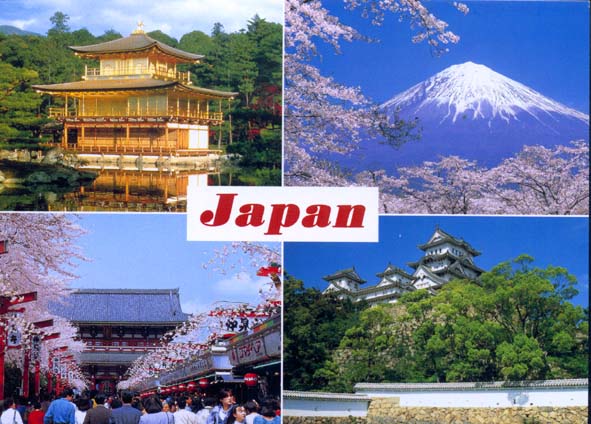
Japan
This is a *very* special postcard to me. Not so much because of the images although they are very nice as well, but because it's my very first private swap postcard received via Postcrossing back in November 2007. It's also slightly before I discovered the forum. I still remember the excitement when I received this card, it was something very special.

Here you can see four traditional views from Japan:
Top left: Kinkaku-ji Temple, Kyoto
Bottom left: Shopping square, Asakusa Temple, Tokyo
Top right: Mt. Fuji and cherry blossoms
Bottom left: Himeji-jo Castle, Himeji
Kinkaku-ji is a Zen Buddhist temple in Kyoto, Japan. The garden complex is an excellent example of Muromachi period garden design. It is designated as a National Special Historic Site and a National Special Landscape, and it is one of 17 locations comprising the Historic Monuments of Ancient Kyoto World Heritage Site. It is also one of the most popular buildings in Japan, attracting a large number of visitors annually.
During the Onin war in 1950, all of the buildings in the complex aside from the pavilion were burned down. The present pavilion structure dates from 1955, when it was rebuilt. The reconstruction is said to be an exact copy of the original, although some doubt such an extensive gold-leaf coating was used on the original structure. In 1984, the coating of Japanese lacquer was found a little decayed, and a new coating as well as gilding with gold-leaf, much thicker than the original coatings, was completed in 1987. Additionally, the interior of the building, including the paintings and Yoshimitsu's statue, were also restored. Finally, the roof was restored in 2003.
If you want to read more about the temple, I can heartily recommend 'The Temple of the Golden Pavilion' by Yukio Mishima. It is a fictionalized version of the historical events leading to the destruction of the original temple, and very well written, too.
Himeji Castle is a hilltop Japanese castle complex located in Himeji in Hyōgo Prefecture. The castle is regarded as the finest surviving example of prototypical Japanese castle architecture, comprising a network of 83 buildings with advanced defensive systems from the feudal period.
Himeji Castle dates to 1333, when Akamatsu Norimura built a fort on top of Himeyama hill. The fort was dismantled and rebuilt as Himeyama Castle in 1346, and then remodeled into Himeji Castle two centuries later. Himeji Castle was then significantly remodeled in 1581 by Toyotomi Hideyoshi, who added a three-story castle keep. In 1600, Tokugawa Ieyasu awarded the castle to Ikeda Terumasa for his help in the Battle of Sekigahara, and Ikeda completely rebuilt the castle from 1601 to 1609, expanding it into a large castle complex. Several buildings were later added to the castle complex by Honda Tadamasa from 1617 to 1618.For over 400 years, Himeji Castle has remained intact, even throughout the extensive bombing of Himeji in World War II, and natural disasters such as the 1995 Great Hanshin earthquake.
Himeji Castle is the largest and most visited castle in Japan, and it was registered in 1993 as one of the first UNESCO World Heritage Sites in the country.

The stamp on the left is a definitive issued in 1997 in a set of 3, and probably the most common Japanese stamp on my mail from there.. The stamp on the right is from a set of 10 'Winter Greetings' stamps issued in 2005.
Here you can see four traditional views from Japan:
Top left: Kinkaku-ji Temple, Kyoto
Bottom left: Shopping square, Asakusa Temple, Tokyo
Top right: Mt. Fuji and cherry blossoms
Bottom left: Himeji-jo Castle, Himeji
Kinkaku-ji is a Zen Buddhist temple in Kyoto, Japan. The garden complex is an excellent example of Muromachi period garden design. It is designated as a National Special Historic Site and a National Special Landscape, and it is one of 17 locations comprising the Historic Monuments of Ancient Kyoto World Heritage Site. It is also one of the most popular buildings in Japan, attracting a large number of visitors annually.
During the Onin war in 1950, all of the buildings in the complex aside from the pavilion were burned down. The present pavilion structure dates from 1955, when it was rebuilt. The reconstruction is said to be an exact copy of the original, although some doubt such an extensive gold-leaf coating was used on the original structure. In 1984, the coating of Japanese lacquer was found a little decayed, and a new coating as well as gilding with gold-leaf, much thicker than the original coatings, was completed in 1987. Additionally, the interior of the building, including the paintings and Yoshimitsu's statue, were also restored. Finally, the roof was restored in 2003.
If you want to read more about the temple, I can heartily recommend 'The Temple of the Golden Pavilion' by Yukio Mishima. It is a fictionalized version of the historical events leading to the destruction of the original temple, and very well written, too.
Himeji Castle is a hilltop Japanese castle complex located in Himeji in Hyōgo Prefecture. The castle is regarded as the finest surviving example of prototypical Japanese castle architecture, comprising a network of 83 buildings with advanced defensive systems from the feudal period.
Himeji Castle dates to 1333, when Akamatsu Norimura built a fort on top of Himeyama hill. The fort was dismantled and rebuilt as Himeyama Castle in 1346, and then remodeled into Himeji Castle two centuries later. Himeji Castle was then significantly remodeled in 1581 by Toyotomi Hideyoshi, who added a three-story castle keep. In 1600, Tokugawa Ieyasu awarded the castle to Ikeda Terumasa for his help in the Battle of Sekigahara, and Ikeda completely rebuilt the castle from 1601 to 1609, expanding it into a large castle complex. Several buildings were later added to the castle complex by Honda Tadamasa from 1617 to 1618.For over 400 years, Himeji Castle has remained intact, even throughout the extensive bombing of Himeji in World War II, and natural disasters such as the 1995 Great Hanshin earthquake.
Himeji Castle is the largest and most visited castle in Japan, and it was registered in 1993 as one of the first UNESCO World Heritage Sites in the country.

The stamp on the left is a definitive issued in 1997 in a set of 3, and probably the most common Japanese stamp on my mail from there.. The stamp on the right is from a set of 10 'Winter Greetings' stamps issued in 2005.
Saturday, 28 May 2011
Khajuraho Temple, India
I recently received a comment about the lack of Indian postcards in this blog. Well, the main problem here is that I only have a few postcards from India. I keep seeing other people receiving officials from there but I think I've only got three in total.. and there aren't too many members from India on the forum. I do have plans to post about a couple of Indian postcards I DO have so they should appear here eventually. And if anyone would like to contribute to my collection, you're more than welcome to send me a message. ;)

This postcard is from an RR - 'hootnoodle' went on holiday in India and sent me this nice card from there. It shows sculptures in the Hindu temple Khajuraho. It is located in a town in the Indian state of Madhya Pradesh, located in Chhatarpur District, about 620 kilometres (385 mi) southeast of New Delhi, are one of the most popular tourist destinations in India. Khajuraho has the largest group of medieval Hindu and Jain temples, famous for their erotic sculpture. The Khajuraho group of monuments has been listed as a UNESCO World Heritage Site, and is considered to be one of the "seven wonders" of India.

The stamps are from a set of 3 definitives issued in 2008, this one showing Indira Gandhi.
Subscribe to:
Posts (Atom)


Maroon